A deep dive into how AI, Web3, and agentic systems are reshaping digital trust, marketing, and the future of business
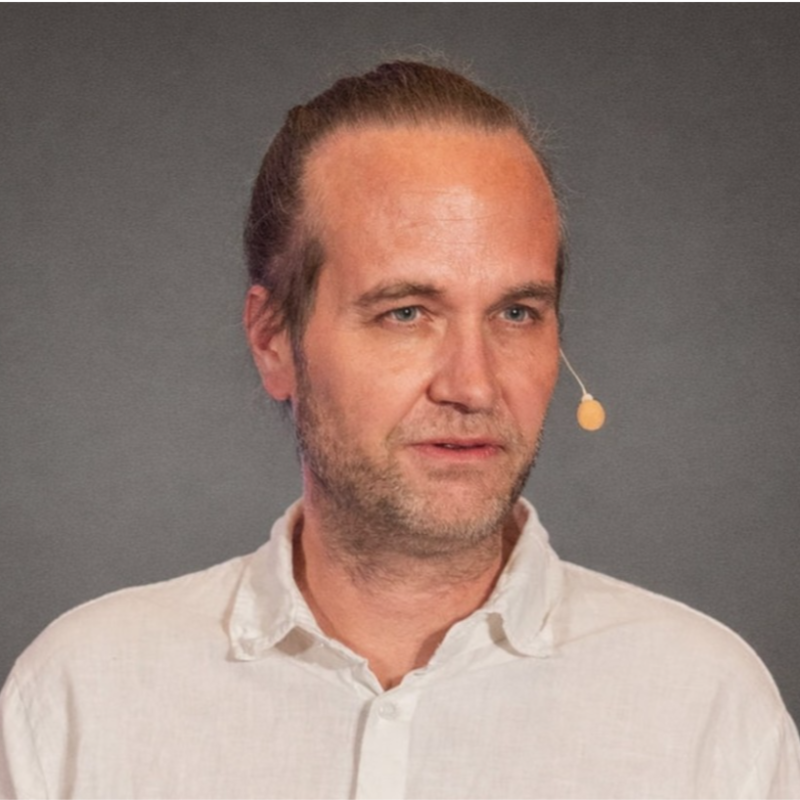
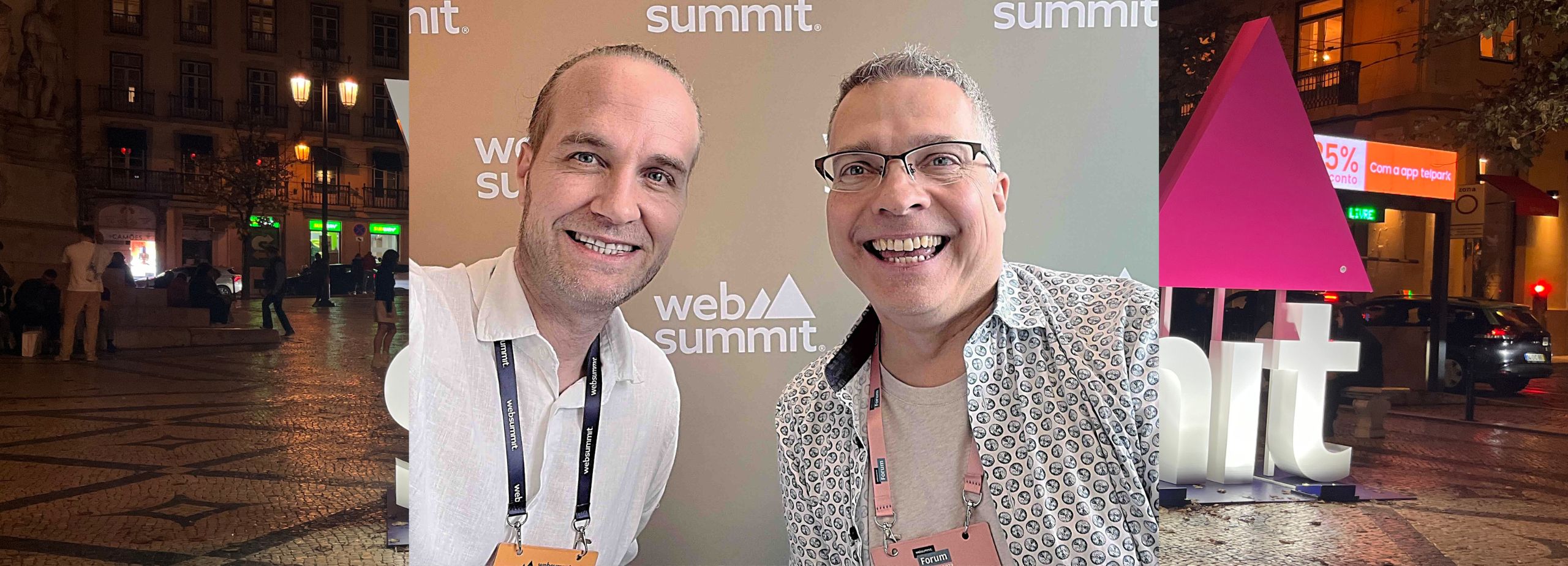
When Tiago Loureiro invited me on behalf of Lunar Strategy, ICP PT HUB, and Caffeine AI to moderate their official Web Summit side event — a session fully dedicated to the AI revolution — the theme “Web 4.0: Designed by AI” immediately felt like the right conversation at the right moment.
Because something significant is happening in the digital world, and most people haven’t fully grasped it yet.
We’ve moved from Web1’s static information, to Web2’s platforms, to Web3’s push for ownership and authenticity. But the most profound transformation is unfolding quietly in real time:
AI is becoming an active co-creator of the internet itself. Not supporting our work… but designing, deciding, adapting, and transacting on our behalf.
This is the early shape of Web 4.0 — an intelligence layer where: •humans and AI agents collaborate •interfaces are generated dynamically •decisions are automated •actions are verifiable •and digital trust becomes programmable
Moderating the panel with Ethan Pierse and Marco Bettiolo, and drawing from the conversations I’ve had over years on my Web3 CMO Stories podcast, one insight stands above the rest:
The next version of the internet won’t be built by developers alone — it will be co-built with AI agents, guided by human intent, and verified by decentralized trust technologies.
This isn’t theoretical. It’s already taking shape around us.
What follows is a deep exploration of Web 4.0 — what it really is, why it matters now, and how leaders can prepare for an AI-first, agent-driven, trust-verified digital future.
⸻
Introduction: A new era of the internet is forming — and most people don't see it yet
We have lived through Web1's static pages, Web2's social platforms, and Web3's push toward digital ownership. But the most profound evolution is happening now — quietly.
An emerging version of the internet is taking shape, one where AI doesn't just support our work… it co-creates, decides, designs, and even transacts on our behalf.
Some call this Web 4.0. I see it as the intelligence layer of the internet.
And after moderating a panel with Ethan Pierse and Marco Bettiolo — plus years of conversations with pioneers on my Web3 CMO Stories podcast — one thing is clear:
The next internet won't be built by developers. It will be co-built by humans and AI agents working together, verified by Web3, and coordinated by new forms of digital trust.
This isn't science fiction. It's already happening.
Below is a full exploration of Web 4.0 — what it is, why it matters, and what today's leaders must do to stay ahead.
A definition grounded in the AI + Web3 convergence
Web 4.0 is the moment when the internet stops being a static environment and becomes a dynamic intelligence system.
It combines:
AI (intelligence + creation)
generating interfaces
automating workflows
making decisions
designing user journeys
Web3 (trust + proof + ownership)
verifying authenticity
verifying identity
tracking actions
enabling agent payments
Together, they create a new paradigm:
An internet that adapts itself in real time — to context, intent, identity, and interaction — while guaranteeing truth and ownership behind the scenes.
This is not a "new platform." It's a new relationship with the digital world.
⸻
2. Why this shift is happening now
Two major forces converged:
AI became generative and agentic
Models can now:
generate UIs
build apps
write code
reason over workflows
coordinate other AI systems
As Marco described on our panel:
"Your phone becomes just a screen for what AI generates on the fly."
Blockchain matured into invisible infrastructure
Far from the crypto hype cycle, Web3 found its real purpose:
verifying truth
verifying ownership
enabling stablecoin microtransactions
providing audit trails for AI agents
Ethan put it bluntly in a conversation with Mark Schaefer:
"No one cares about Web3. They care that something is real, and that it belongs to you."
These two forces — AI and verifiability — create the foundation of Web 4.0.
⸻
3. How AI changes the digital experience
From static websites to adaptive intelligence
In Web 4.0:
Websites stop being designed once.
Interfaces stop being fixed.
Navigation stops being predetermined.
Instead, AI assembles everything dynamically.
Example: The AI-generated interface
Imagine a customer landing on your website:
They don't see a homepage.
They see an interface generated specifically for their intent.
Their AI agent negotiates directly with your company's AI agent.
As Marco explained:
"AI can generate any UI you need. The browser becomes optional."
This reshapes everything we know about UX, web design, and marketing funnels.
⸻
4. AI agents: the new workforce behind the internet
We are entering a world where:
Human tasks become AI workflows
Human decisions become agentic reasoning
Human verification becomes cryptographic proof
In Ethan's words:
"Everything that was built can be rebuilt. And rebuilt better."
Entrepreneurs are already using agents to run companies
Ethan shared his own experiment:
Build a mini SaaS every month using AI
When the product is fully defined, Claude/Gemini can code it nearly perfectly
When the founder improvises and "just prompts," the result is poor
This leads to one of the most important rules of modern AI:
The 50-Page Rule
AI outputs are a reflection of input clarity. If you invest time into structured thinking — PRDs, workflows, requirements — AI becomes an extraordinary execution engine.
If not, it becomes a guessing machine.
This insight alone is reshaping how teams operate.
⸻
5. The rise of the agent economy: why stablecoins matter
One of the most powerful insights Ethan described is the link between AI agents and Web3:
AI agents need to pay each other.
Think about the workflows we already automate:
sending emails
generating content
reading PDFs
data extraction
API calls
cloud usage
What if each step had a cost of $0.003 or less?
Traditional payment rails cannot handle:
microtransactions
global settlement
24/7 automation
Stablecoins can.
This is why JP Morgan processes $120–150B internally with its own stablecoin.
Ethan summarized it perfectly:
"We were never going to see consumer crypto as a big deal. But agents will use crypto constantly, invisibly, at massive scale."
This is not a trend. It is infrastructure.
⸻
6. Blockchain as the audit trail for AI
AI will create, decide, optimize, and act — at scale.
But how do we trust what agents did?
Blockchain provides:
immutable activity logs
verifiable history
proof of computation
traceability of agent decisions
This matters because:
Agents will launch campaigns.
Agents will adjust pricing.
Agents will run workflows.
Agents will make financial decisions.
Human oversight becomes impossible without automated auditability.
Ethan's phrasing was direct:
"Agents will need to track activity on-chain so we can verify what happened."
This is the missing trust layer.
⸻
7. Why misinformation cannot be solved purely by blockchain
Blockchain can verify origin. But it cannot fix belief.
Ethan highlighted a hard truth:
"User belief often overrides verification."
Even if:
content is signed
origin is authentic
credentials are verifiable
…people still believe what confirms their worldview.
This is where modern CMOs must lead — with narrative, trust-building, and transparent communication. It's also why I emphasized in The Future CMO that trust is now a strategic capability, not just a PR function.
⸻
8. Practical examples showing how Web 4.0 works today
Here are concrete examples — taken from the panel and from Ethan's demonstrations — that show Web 4.0 is not hypothetical.
⸻
Example 1: One ad becomes 1,000 ads in 15 minutes
Using Canva's API + generative AI:
Design one ad template
Feed a CSV of 1,000 demographic profiles
AI generates 1,000 tailored versions
Each version matches the viewer's identity, language, background, and interests
This transforms marketing:
No manual A/B testing
No mass-production bottlenecks
No long creative cycles
Hyper-personalization becomes real-time.
⸻
Example 2: A six-hour report becomes a 30-second workflow
A financial controller spent 6 hours every Friday compiling data from three Excel sheets into a PowerPoint.
Using Microsoft Copilot:
one prompt
three data sources
one automated slide deck
automatic distribution to the team
Time spent: 30 seconds
This is not about job replacement. It's about eliminating work that should have never been human in the first place.
⸻
Example 3: Multi-model prompting removes hallucinations
Ethan's technique:
Ask ChatGPT for deep research
Ask Gemini: "Where is ChatGPT wrong?"
Ask Claude: "Refine based on both analyses"
This triangulation:
eliminates falsehoods
increases depth
produces near-expert-level synthesis
As someone who works with CMOs and founders, I've seen this approach repeatedly outperform single-model strategies.
⸻
Example 4: Soulbound tokens solve credential fraud
700,000 people claim Harvard degrees on LinkedIn. Harvard has issued ~370,000.
Web3 solves this instantly:
Harvard issues a soulbound NFT
The graduate cannot transfer it
LinkedIn verifies it in real time
This is Web 4.0's trust layer in action.
⸻
Example 5: AI-generated interfaces remove design bottlenecks
Marco explained how AI can:
generate UI mockups
design interfaces
produce visual workflows
assemble front-ends dynamically
Meaning:
no browser needed
no traditional UI
every digital touchpoint becomes adaptive
This will change SaaS, ecommerce, onboarding, and customer service forever.
⸻
9. The rise of the digital brain inside companies
Marco's company Sensei works with "digital replicas" — AI twins of team knowledge.
This solves a problem every organization has:
Outdated documentation
Lost tribal knowledge
Slow onboarding
Inconsistent answers
Now:
Teams update the AI brain directly inside Slack or Teams
The knowledge base becomes self-refreshing
Expertise remains even when employees leave
This is one of the most practical steps toward Web 4.0 — and one of the easiest to adopt.
⸻
10. How Web 4.0 transforms marketing
As I wrote in The Future CMO, the modern marketing leader must evolve into a system architect — not a content producer.
In Web 4.0:
Content becomes dynamic
AI produces infinite variations.
Journeys become generative
AI adjusts based on real-time behavior.
Trust becomes verifiable
Web3 proves authenticity and ownership.
Teams become hybrid
Humans + agents creating together.
Narrative becomes the differentiator
If AI can generate unlimited content, differentiation comes from:
story
philosophy
frameworks
community
leadership
Not volume.
⸻
11. What this shift means for CMOs, founders, entrepreneurs, and teams
Below are role-specific insights — highly SEO-friendly and aligned with real user queries.
⸻
For CMOs
How does Web 4.0 change marketing strategy?
Campaigns shift to adaptive intelligence systems
Creative shifts to AI-first production pipelines
Trust becomes a product, not a message
Data becomes agent-readable, not just human-readable
Teams shift from execution to orchestration
CMOs who cannot work with agents will fall behind CMOs who can.
⸻
For founders
How does Web 4.0 change company building?
Launch MVPs in weeks, not months
Replace early hires with AI agents
Use stablecoins for microtransactions
Let blockchain provide auditability
Build niche SaaS for 100–1,000 customers — profitable from day one
Every Zap on Zapier is now a potential micro-business.
⸻
For entrepreneurs
How can solo creators scale like small teams?
AI now handles:
design
code
content
operations
marketing
onboarding
Meaning:
You can serve global audiences
You can produce at scale
You can monetize through tokens, subscriptions, or access passes
The "1,000 true fans" model becomes even more realistic.
⸻
For knowledge workers
What skills protect your career in a world of AI agents?
Learn prompting
Learn orchestration
Learn system design
Become AI-powered, not AI-replaced
Build your own agent stack
Ethan summarized it well:
"AI isn't coming for your job yet. But AI-powered people are."
⸻
12. Why Web 4.0 matters for the future of marketing leadership
13. The path forward: How leaders can prepare today
Here is the clearest roadmap I can offer:
1. Build your AI marketing system
Not tools — systems:
content engines
research pipelines
agent workflows
analytics agents
dynamic creative systems
2. Implement your trust layer
Start with:
content provenance
verified assets
tokenized access
stablecoin readiness
3. Create or join a digital brain initiative
Start with one team. Grow from there.
4. Design your agent workforce
Begin with:
research agent
content agent
analytics agent
operations agent
Then scale.
5. Lead with narrative clarity
In a world of infinite content, your philosophy is your differentiator.
⸻
Conclusion: Web 4.0 is not a new version of the internet — it's a new relationship with intelligence
The internet is evolving from:
pages → systems
clicks → conversations
content → intelligence
speculation → verification
platforms → agents
The organizations, CMOs, and founders who thrive will be those who learn to collaborate with:
human intelligence
machine intelligence
decentralized trust
…all at the same time.
This is the world Web 4.0 makes possible. This is the world we explore on Web3 CMO Stories. This is the world I prepare leaders for in The Future CMO and at the Sintra Synergies retreat.
The quiet revolution is underway. And those who understand it now will lead it tomorrow.
Want to see more of my articles in Google? Add webdrie.net as a preferred source.
Fractional CMO and AI Visibility Strategist. Author of The Future CMO, endorsed by Philip Kotler. Host of the Web3 CMO Stories podcast and founder of the Sintra Synergies retreat.
About the author
Joeri Billast
Joeri Billast is a Fractional CMO and AI Visibility Strategist based in Sintra, near Lisbon. He is the author of The Future CMO, endorsed by Philip Kotler, and hosts Web3 CMO Stories. The Library is where he publishes his articles, interviews and briefings.






 The 50-Page Rule