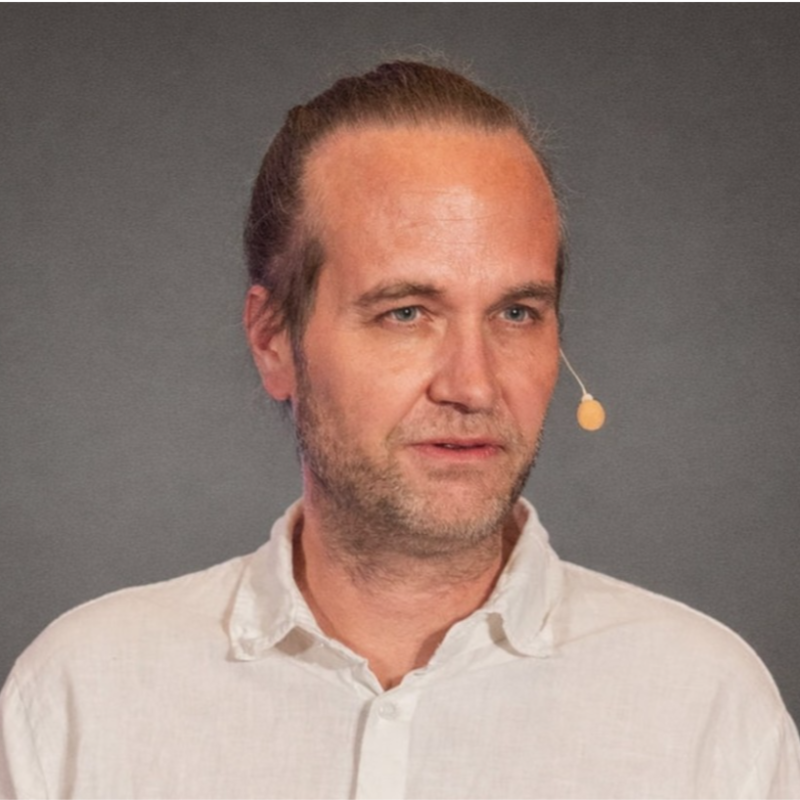
I speak with Wes Kussmaul, Creator of Delphi, the social network credited with popularizing the internet. He wants to tell you everything we got wrong. We explore why online life keeps failing at trust, even as security spending grows, and why the real missing layer is accountability rather than more fear-driven defenses. Wes Kussmaul argues the web is an “outdoor” public space and makes the case for digital buildings where identity, privacy, and responsibility can finally work together.
• Delphi’s early shift from encyclopedia to social network economics • The “outdoors vs indoors” model for internet security and governance • Why real security means accountability rather than “catch the bad guy” • License plates as a blueprint for anonymous yet accountable online behavior • Multiple personas and compartmentalised identity for privacy protection • PKI and X.509 identity certificates as foundational trust infrastructure • Why Web3 still depends on trusted authorities for identity claims • Identity reliability scoring and measurable identity assurance • Occupancy-permit style certification for software and systems • Enron and auditing as a lesson in individual accountability • Critique of cybersecurity industry incentives and fear-based selling • Where to learn more: authentiverse.net and SHIPS
We Built the Internet. We Forgot to Build Trust.
The internet didn’t start as a chaos machine. Wes Kussmaul, founder of Delphi Internet Services, traces an early vision built around information retrieval, including what he describes as the world’s first online encyclopedia. Then the business model forced a pivot: forums, special interest groups, and email became the “savior,” and the product quickly resembled what we now call social media. That shift matters for modern digital identity, online privacy, and accountability because the web scaled human interaction faster than it scaled trust. Today’s cybersecurity problems, from phishing to account takeover, are symptoms of a network that optimized for reach and convenience without building the governance structures that make people and organizations reliably accountable.
Wes frames the core failure with a simple metaphor: the web is “outdoors” all the time. Outdoors is liberating, but it is not where we naturally do high-trust work. In the physical world, highways connect us, but we conduct sensitive decisions inside buildings, where access control, roles, and identities are managed. Buildings create accountability spaces: you pass through a doorway, show the right badge, and enter rooms designed for specific levels of trust. Online, we try to hold meetings, store files, and even run banking “on a billboard,” expecting privacy and security in an environment that behaves like a public street. Without digital indoor spaces, the burden shifts to endless monitoring and “catch the bad guy” tactics that can never keep up.
A key idea is that privacy and accountability are not enemies. The real world already balances them: license plates make drivers accountable on public roadways while keeping them effectively anonymous unless there is an incident. Wes argues the digital world can do this even better by using multiple personas with separate credentials, so your dating identity is not linked to your professional identity, while still supporting verified disclosure when required. The technical building blocks he highlights are PKI and X.509 digital identity certificates, combined with an identity assurance approach that scores identity reliability. He describes an IDQA score from 0 to 72, derived from multiple metrics, and digitally signed by an authority that attests to how confidently a certificate maps to a real human being.
Wes Kussmaul, founder of Delphi Internet Services
That “authority” is where Web3 debates get real. Wes cites the claim that there is no such thing as decentralized governance, because meaningful transactions require trusted identity claims and enforceable accountability. Web3 can add new navigation and coordination tools, but it still operates outdoors unless it creates verifiable spaces with privacy, security, and responsibility. He pushes the analogy further with “occupancy permits” for software: professionals should be able to audit and sign off on systems with real consequences, like architects or licensed auditors. The Enron and Arthur Andersen story becomes a warning that group signatures and diffuse responsibility weaken trust. The episode closes with a critique of cybersecurity incentives, arguing the industry profits from fear and from solutions that do not eliminate root causes, and pointing listeners to authentiverse.net and the SHIPS course as “solutions hiding in plain sight” for building accountable digital infrastructure.
Fractional CMO and AI Visibility Strategist. Author of The Future CMO, endorsed by Philip Kotler. Host of the Web3 CMO Stories podcast and founder of the Sintra Synergies retreat.
About the author
Joeri Billast
Joeri Billast is a Fractional CMO and AI Visibility Strategist based in Sintra, near Lisbon. He is the author of The Future CMO, endorsed by Philip Kotler, and hosts Web3 CMO Stories. The Library is where he publishes his articles, interviews and briefings.