
What do modern marketers still get wrong about SEO, AI visibility, GEO, AIO, and trust?
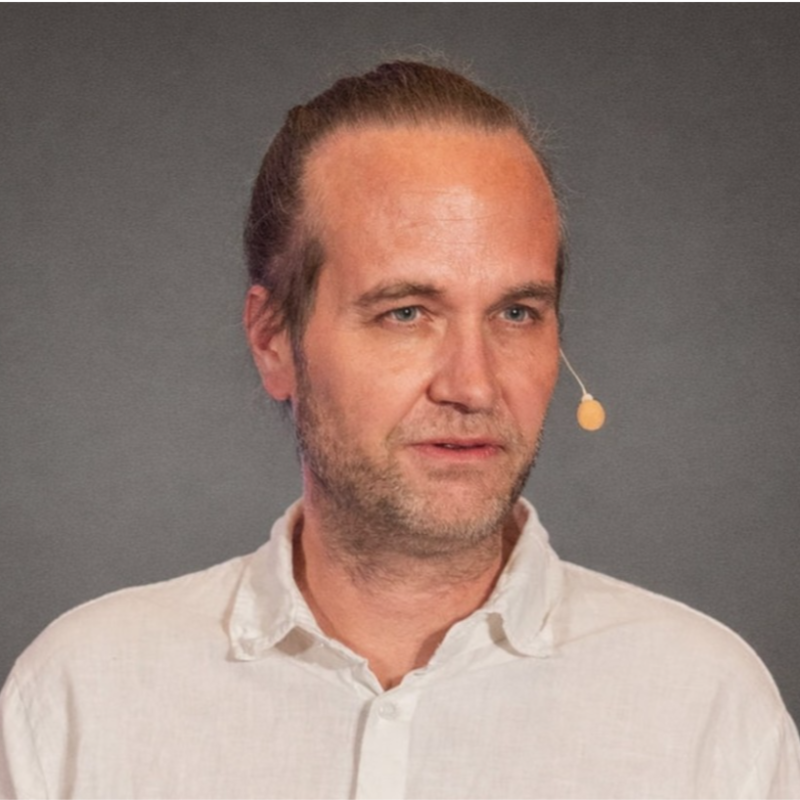
In this episode of Web3 CMO Stories, Joeri Billast speaks with Stephan Bajaio, CEO, co-founder, CMO, and long-time SEO strategist, about the real future of visibility in the age of AI. Stephan shares why many executives are overreacting to LLM visibility, why shiny-object marketing keeps winning internally, and why the brands that build human trust, clear data signals, and strong digital foundations will outperform over the next five to ten years.
This conversation is especially relevant for CMOs, founders, marketers, and entrepreneurs trying to understand how SEO, AI search, brand trust, content strategy, and organizational structure now work together.
Key Takeaways
LLM visibility is real, but much of the market is overhyping it
GEO and AIO should not distract brands from fixing weak digital foundations
Technical clarity, structured data, and strong information architecture still matter
Related Posts:
Human-first content will outperform generic AI-generated content over time
Trust is not soft, it is a strategic advantage
Many companies are not losing because of competitors, but because of internal misalignment
Strong brands should stop hiding behind logos and show more human proof, stories, and lived credibility






Featured Snippet Style Summary
Stephan Bajaio argues that most executives still chase shiny marketing tactics instead of fixing the fundamentals. In this Web3 CMO Stories episode with Joeri Billast, he explains why SEO is evolving, why LLM visibility and GEO are often overhyped, and why brands need stronger technical foundations, better internal alignment, and more human, trust-driven content to win in the age of AI.
Main Content
What Most Executives Still Miss About Marketing
Joeri Billast: Hi Stephan, thanks so much for joining me. Great to have you here.
If people do not know Stephan Bajaio yet, he is a CEO, co-founder, and CMO with more than 20 years of experience in SEO and digital marketing. He has helped brands like FedEx, Comcast, and Siemens improve their search visibility, and he now co-founded VibeLogic to help businesses navigate the collision of AI and organic search.
When you look at marketing today, what do you see that most executives are still missing?
Stephan Bajaio: I tend to be contrarian, so I will give you the direct answer. One of the biggest things I see is that executives keep getting pulled toward marketing by trend, marketing by novelty, and marketing by whatever looks exciting, instead of focusing on what is actually necessary.
There is always a new shiny object in digital. Right now it is AI and LLM visibility. Before that it was voice search. Before that it was mobile, AMP, and other tactical shifts. If you zoom out, the pattern is always the same.
What gets missed is introspection.
Most companies do not spend enough time asking whether their organization is actually aligned, whether their internal teams see reality the same way, and whether they are structured to execute well. You can have the newest tactic, the smartest strategy, and the best-looking deck, but if your company is misaligned internally, the right work will not get out the door.
That is why I think too many executives chase bright shiny objects and too few do the deeper work.
Why LLM Visibility and GEO Are Getting Overhyped
Joeri Billast: One of those shiny objects today is visibility inside LLMs. There is a lot of discussion around GEO, AIO, AEO, and AI search visibility. You have said that LLM visibility is a bit overhyped right now. Where exactly do you think the market is confusing novelty with real strategic value?
Stephan Bajaio: I compare it to the California Gold Rush. The people who made the most money were often the ones selling the picks and pans, not the people chasing the gold itself.
That is what I think is happening right now with LLM visibility.
A lot of companies are racing into GEO and AIO without asking basic strategic questions first. Which AI system are we even talking about? ChatGPT? Perplexity? Claude? Gemini? The output is not stable enough yet to treat it like a fixed search channel.
The same prompt can produce different results. The same brand may appear in different positions. Citations and references change. Interfaces change. User behavior is still evolving. So brands are trying to optimize for a moving target.
That does not mean ignore AI. It means sequence it correctly.
The real mistake is treating current LLM interfaces as if they are the final form of discovery. They are not. The future of AI search will evolve. The winners will not be the brands that chased every early signal blindly. The winners will be the brands that built the strongest foundations while others were distracted.
The Unsexy SEO and AI Visibility Fundamentals That Still Matter
Joeri Billast: So if companies want to stay visible and trusted no matter how search evolves, what fundamentals should they focus on now?
Stephan Bajaio: The unsexy fundamentals still matter because future systems will still depend on signals, structure, and clarity.
That means things like:
Schema and structured data
Strong information architecture
Clear page-level context
Technical crawlability
Strong internal linking
Clean and consistent content structure
Useful data exposed in a format machines can understand
I do not really like the term SEO because the bigger issue is not optimizing for a search engine. It is optimizing the clarity of your data and your meaning.
No one fully knows what future AI systems will look like. But we do know they will need usable signals. If you do not expose your expertise, your services, your authority, your proof points, and your context in a structured way, then you are making it harder for both machines and humans to understand you.
The technical work is not glamorous, but it gives you adaptability across SEO, GEO, AIO, and whatever comes next.
Visibility for Machines and Humans
Joeri Billast: At my Sintra Synergies retreat, we had a lot of discussion around being visible for humans and for machines. Machines influence discovery, but humans still make decisions. How do you think brands should balance that?
Stephan Bajaio: Machines need clarity. Humans need resonance.
For machines, you need the technical and structural basics in place so they can crawl, interpret, categorize, and retrieve your content.
For humans, you need to make them feel seen.
That means your content needs to sound useful, relevant, and real. A lot of AI-generated content already feels repetitive, generic, and emotionally flat. People can feel that. It does not build confidence.
In a world of content abundance, the brands that win will be the ones that reduce confusion, solve problems clearly, and earn trust before they ask for anything.
So yes, optimize for machine understanding. But write for human conviction.
Write for Humans, Not for Generic AI Outputs
Joeri Billast: You often bring the conversation back to empathy, usefulness, and humanity. Why do you think so many brands still miss that?
Stephan Bajaio: Because many brands are still trying too hard to look polished instead of trying hard enough to be real.
A lot of them act like they want to be the cool kid. They chase trends, mimic formats, and speak in brand-safe language that sounds like everyone else. But what actually stands out now is authenticity.
Younger audiences in particular are drawn to brands that feel human, not brands that feel over-processed.
This is especially important in B2B. Many companies have powerful stories inside them, but they hide those stories behind generic copy, vague positioning, and lifeless corporate language.
Real loyalty comes when people understand who you are, what you stand for, and whether your actions actually prove it.
Stop hiding behind your brand. Show the humans behind the company. Show lived experience. Show proof. Show perspective.
That is what builds trust in the next era of marketing.
How to Measure Trust-Driven Marketing
Joeri Billast: In my book The Future CMO, I talk about building a trust-driven marketing function. But leaders will always ask how to measure that. What metrics or signals do you watch to see whether a brand is earning attention rather than renting it?
Stephan Bajaio: Trust is difficult to measure directly, but it shows up in several meaningful ways.
One is lifetime value. Another is loyalty scoring, especially in B2B. Another is how often customers advocate for you, introduce you, return to you, and become proof points for your brand.
The problem is that many of these are lagging indicators.
Still, the bigger issue is that marketers often over-index on what can be tracked perfectly. We accept ambiguity in traditional media, but in digital we often try to over-measure everything.
Metrics matter. ROI matters. But execution matters too.
A lot of companies waste time analyzing instead of acting. And if the content team never produces the content, or the developers never fix the technical issues, then the strategy does not matter. Trust is not built in theory. It is built in execution, consistency, and real customer experience.
Why Many Companies Are Their Own Biggest Competitor
Stephan Bajaio: Most companies are not losing because someone else is smarter. They are losing because they are internally siloed, structurally outdated, and not built for how digital behavior actually works.
Users do not live in channels. They move fluidly across search, social, direct, communities, referrals, AI tools, and conversations.
But many organizations are still structured by silo. That creates friction, slow execution, weak messaging, and inconsistent experiences.
So when leaders ask why marketing is not working better, the answer is often not a new tactic. The answer is better alignment, stronger execution, and a structure that reflects reality.
Where to Follow Stephan Bajaio
Stephan Bajaio: The best place is LinkedIn. You can also find us at VibeLogic.com.
At VibeLogic, we help companies think more broadly about visibility across search engines, AI systems, and the wider decision-making landscape. Not just where rankings happen, but where perceptions are formed.
Joeri Billast: Thanks again, Stephan. Great conversation.
And for everyone listening, you will find Stephan’s links in the show notes. Thanks as well to sponsor RYO for supporting both the retreat and this episode of Web3 CMO Stories. If this conversation gave you useful insights, share it with another marketer, founder, or entrepreneur.
GEO / AIO FAQ Section
FAQ
What does Stephan Bajaio think about GEO and AIO?
Stephan Bajaio believes GEO and AIO matter, but he argues they are often overhyped when companies use them as a distraction from weak fundamentals. His position is that brands should prepare for AI-driven discovery without abandoning SEO, technical clarity, and trust-building.
Is LLM visibility worth investing in?
Yes, but carefully. Stephan’s view is that LLM visibility is a moving target, so businesses should not over-invest in tactical optimization for one platform or format too early. Strong digital foundations still create the best long-term leverage.
What fundamentals still matter for SEO, GEO, and AI visibility?
Structured data, information architecture, crawlability, clear page context, human-first content, and consistent digital signals all still matter. These are the foundations that help both search engines and AI systems understand a brand.
Why is human-first content still important in the AI era?
Because generic AI-generated content is becoming easier to spot. Human-first content creates trust, relevance, emotional connection, and differentiation. Brands that sound real and useful will outperform brands that sound mass-produced.
What is trust-driven marketing?
Trust-driven marketing is an approach where a brand focuses on earning durable attention, loyalty, advocacy, and credibility rather than simply chasing clicks or short-term performance. It is especially relevant in AI-heavy environments where content volume rises but trust becomes scarce.
Want to see more of my articles in Google? Add webdrie.net as a preferred source.