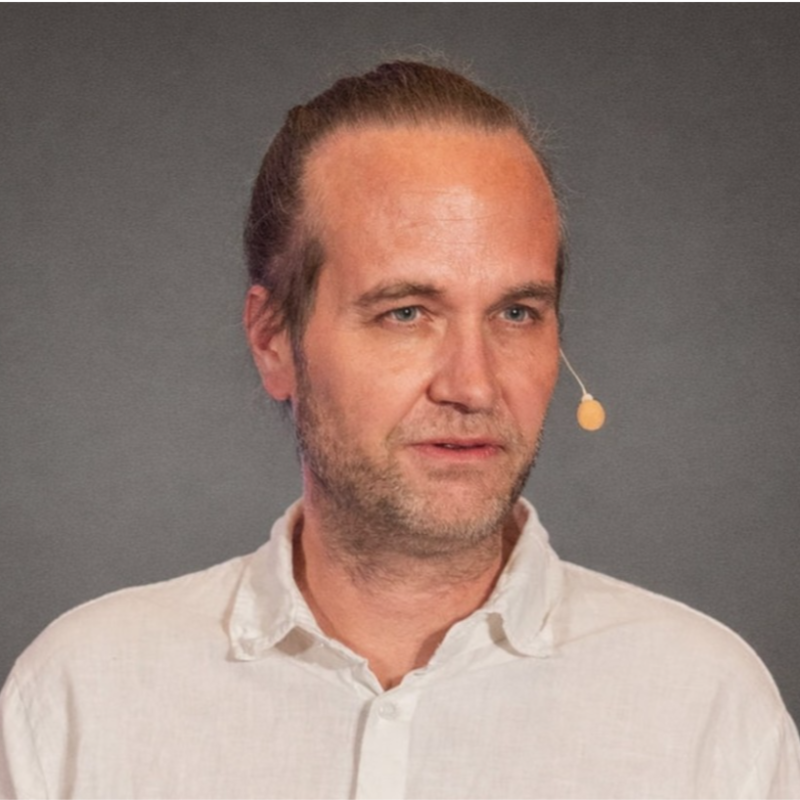

We dig into where serious Web3 capital is moving with Bashar Al Madhoun, CEO of Dubai’s ALMAK Group, a royal-backed global holding and investment management group chaired by Sheikh Ali bin Rashed Al Maktoum. Bashar shares what investors look for beyond the hype, from practical adoption and founder clarity to governance, trust, compliance and the growing opportunities he sees across Southeast Asia.
• Practical Web3 adoption and real-world problem solving from Kuala Lumpur takeaways
• Clarity as the quickest investor “yes or no” signal
• The five-minute filter: problem, customer, solution, business model, team capability
• Personal brand and leadership credibility as part of due diligence
• Red flags when growth is only visibility, not real usage and retention
• Governance, legal structure, regulation, data protection and conflict management as advantages
• Trust built through consistency and honest handling of uncertainty
• Dubai’s institutional mindset versus Southeast Asia’s talent and practical market proximity
• AI and Web3 convergence: substance versus narrative packaging
• AI for faster diligence, not delegated judgment
• Founder advice: build smaller, protect reputation, protect IP, build an honest team
What Serious Web3 Investors Want
Web3 investing has matured fast, and the biggest shift is how practical the conversation has become. In this episode of Web3 CMO Stories, I speak with Bashar Al Madhoun, CEO of ALMAK Group in Dubai, about what serious investors are actually looking for in 2026. ALMAK operates as a royal-backed global holding and investment management group chaired by Sheikh Ali bin Rashed Al Maktoum, giving Bashar a perspective that spans investment, governance, compliance, digital assets and international markets.
Fresh from speaking and meeting with founders and investors in Kuala Lumpur, Bashar says the most interesting conversations are increasingly moving away from technology for technology’s sake.
Instead, founders and investors are focusing on real business problems involving digital identity, ownership, payments, data infrastructure and new collaboration models that can reduce friction and increase transparency.
That shift matters for anyone pitching Web3 venture capital or institutional investors today. Serious capital increasingly follows measurable utility rather than blockchain terminology or speculative narratives. Some of the strongest opportunities may even come from companies that do not position themselves primarily as “Web3 businesses”, but use blockchain infrastructure to make existing processes more efficient, auditable and accessible.
The Five-Minute Investor Filter
From an investor perspective, one of the quickest ways to earn a second meeting is clarity.
Can the founder explain:
Related Posts:





- What problem are we solving?
- Who exactly has that problem?
- Why is this solution better?
- How does the business make money?
- Can this team actually execute?
Many projects look impressive in a pitch deck but struggle to answer those basic questions.
Bashar explains that experience alone is not enough. Investors are looking for people who understand the problem, can execute under changing conditions and can communicate the trade-offs involved in building the business.
A polished presentation may earn attention. Coherent thinking earns the next conversation.

Bashar Al Madhoun, CEO of ALMAK Group in Dubai
When Growth Becomes a Red Flag
Founders and marketers also underestimate how quickly impressive growth metrics can work against them.
A large community, thousands of followers or high social visibility can look attractive, but investors increasingly want to understand what sits underneath those numbers.
Are users staying?
Are customers paying?
Is the community genuinely engaged?
Is there enterprise demand?
Or is the apparent momentum primarily visibility?
For marketers, this creates an important distinction: attention and adoption are not the same thing.
Governance and Compliance Can Strengthen the Brand
Governance, regulation and compliance are sometimes treated as obstacles to innovation in Web3.
Bashar sees them differently.
Strong legal structures, transparent handling of capital, proper data protection, clear conflict-management processes and serious risk management can all become competitive advantages.
For an investor, these signals reduce uncertainty.
For a customer or partner, they increase credibility.
And for marketers, they can become part of the brand narrative rather than something hidden in the legal section of the website.
Trust Matters Even More in the AI Era
AI makes it increasingly easy to create polished websites, presentations, forecasts and investor materials.
That makes surface-level professionalism less valuable as a trust signal.
Bashar argues that trust instead comes from consistency between what founders say and what they actually do.
One particularly important signal is how leaders communicate uncertainty.
Founders do not need to pretend that every risk has been solved. In many cases, acknowledging what is uncertain and explaining how the team intends to manage it creates more credibility than overconfident promises.
That is becoming increasingly important in an environment where AI can make almost any company look sophisticated on the surface.
Dubai and Southeast Asia: Complementary Web3 Ecosystems
Regional context also shapes how investment opportunities develop.
Dubai brings a highly international and increasingly institutional environment, with strong access to capital, regulatory infrastructure and global business networks.
Southeast Asia offers something different.
Bashar sees strong technical talent, practical adoption and founders operating close to real-world problems, sometimes in markets where access to capital or infrastructure remains more constrained.
That creates an interesting opportunity.
Rather than viewing Dubai and Southeast Asia as competing Web3 hubs, Bashar sees the potential for complementary ecosystems where talent, infrastructure, market access and capital can connect across regions.
AI and Web3: Substance or Packaging?
AI and Web3 increasingly appear together in startup pitches.
But combining two powerful technology narratives does not automatically create economic value.
The real question is simpler:
Does the combination solve the problem better than either technology could solve it independently?
AI can also play an increasingly useful role on the investor side.
It can summarize documentation, identify inconsistencies, compare information and accelerate due diligence.
But Bashar draws a clear line between supporting judgment and replacing judgment.
Investment decisions still depend on context, experience, human interaction and an understanding of risk that cannot simply be delegated to an algorithm.
Build for the Next Five Years, Not the Next Hype Cycle
For founders building for the next three to five years, Bashar’s advice is deliberately unglamorous.
Solve a specific problem.
Understand exactly who needs the solution.
Keep the organization focused.
Protect governance, data, intellectual property, security and reputation from the beginning.
And build a team where people can challenge assumptions honestly.
The projects most likely to survive the next cycle may not be the ones making the biggest promises today.
They may simply be the ones building something useful, proving that people need it and earning trust one decision at a time.
Want to see more of my articles in Google? Add webdrie.net as a preferred source.