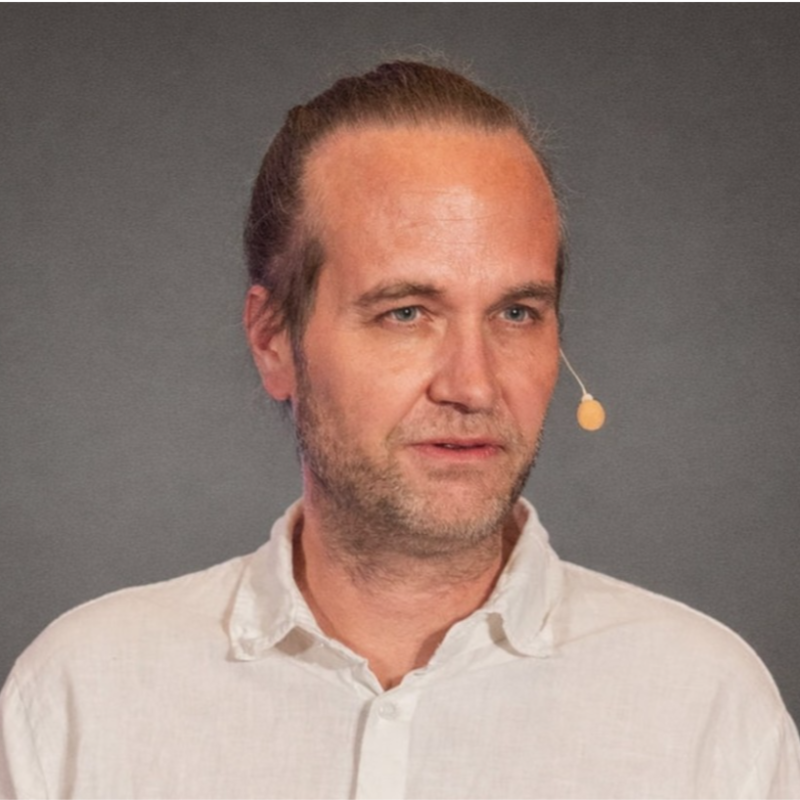

Kelwin Fernandes, co-founder and CEO of NILG AI with 15 years in artificial intelligence, shares insights on transitioning from deep AI research to entrepreneurship and implementing AI strategies that create real business value.
• Distinguishing between fear-of-missing-out AI adoption and strategic integration that transforms core business processes
• Moving beyond basic AI applications like chatbots to focus on decision-making and operational workflows
• First impressions of GPT-5: more natural responses but varying performance across different use cases
• Understanding AI as a "prediction machine" that lowers uncertainty in business decisions
• Reimagining entire workflows with AI rather than just replacing individual steps
• How AI could transform business models by driving production costs toward zero
• The radical concept of consultants paying clients for the opportunity to optimize their businesses
• The 10X Rule approach to marketing and brand building, achieving 140+ speaking events in a year
• Entrepreneurial wisdom: first-time entrepreneurs focus on product, second-time entrepreneurs on distribution, third-time entrepreneurs on networking
• Building a personal brand to enhance business opportunities and relationships
Check out Kelwin's YouTube channel under the same name as his business, and look for his upcoming book on AI by the end of the year.
The intersection of artificial intelligence and business strategy is rapidly evolving, with entrepreneurs like Kelwin Fernandes at the forefront of this transformation. As the co-founder and CEO of NILG AI, Kelwin brings over 15 years of experience in artificial intelligence, having helped businesses across healthcare, marketing, and automotive sectors integrate AI solutions. His journey from deep AI research to entrepreneurship offers valuable insights for businesses looking to harness the power of AI effectively.
One of the most compelling aspects of Kelwin's approach is his focus on decision-making rather than just implementation. He emphasizes that AI is fundamentally a prediction machine that lowers uncertainty in decision-making processes. This perspective aligns with the concepts presented in the influential book "Prediction Machines," which describes AI as a tool that provides new data points to reduce uncertainty in business decisions. By understanding AI through this lens, businesses can move beyond surface-level applications and focus on how AI can transform their core operations.
The distinction between transactional AI adoption and strategic integration is crucial. Kelwin observes that companies often approach AI with a "fear of missing out" mentality, implementing chatbots or content creation tools without considering how these technologies could reshape their fundamental business processes. The real value emerges when businesses integrate AI into their core decision-making frameworks –manufacturing workflows, supply chain management, or sales orchestration – rather than merely automating peripheral functions like customer support.
With the recent release of GPT-5, Kelwin shares his initial impressions about the evolution of large language models. While noting improvements in the naturalness of responses, he also acknowledges that results vary depending on the specific use case. This highlights an important point for businesses: the effectiveness of AI tools depends on their alignment with specific business objectives and processes. A model that performs exceptionally well for one task may require significant adaptation for another.

Kelwin Fernandes - NILG.AI
Perhaps most revolutionary is Kelwin's vision for how AI could fundamentally transform business models. As AI drives the cost of production and service delivery closer to zero, traditional pricing structures based on hours or effort become increasingly obsolete. Instead, businesses might transition to value-based pricing models where they charge based on impact or results. This shift could democratize access to high-quality services, making them available to smaller clients who previously couldn't afford them.
Kelwin even proposes a radical future scenario where consultants might pay clients for the opportunity to optimize their businesses, confident that the automated solutions they implement will generate returns that exceed this initial investment. While this represents an extreme case, it illustrates how dramatically AI could reshape business relationships and revenue models in the coming years.
For entrepreneurs building both businesses and personal brands, Kelwin offers a valuable framework: first-time entrepreneurs focus on product, second-time entrepreneurs focus on distribution, and third-time entrepreneurs focus on networking and ecosystem building. This progression reflects the understanding that even the best products require effective distribution channels and strong relationships to succeed in the marketplace. His ambitious approach to marketing – aiming for 140 events in a year and using AI to automate and scale these efforts – demonstrates how AI can be used not just as a product feature but as a tool for business growth and brand building.
The conversation with Kelwin Fernandes highlights that successful AI implementation isn't about technology alone, it's about reimagining how businesses operate, make decisions, and create value. As AI continues to evolve, the entrepreneurs and organizations that thrive will be those who view it not as a mere tool but as a catalyst for fundamental business transformation.
Want to see more of my articles in Google? Add webdrie.net as a preferred source.