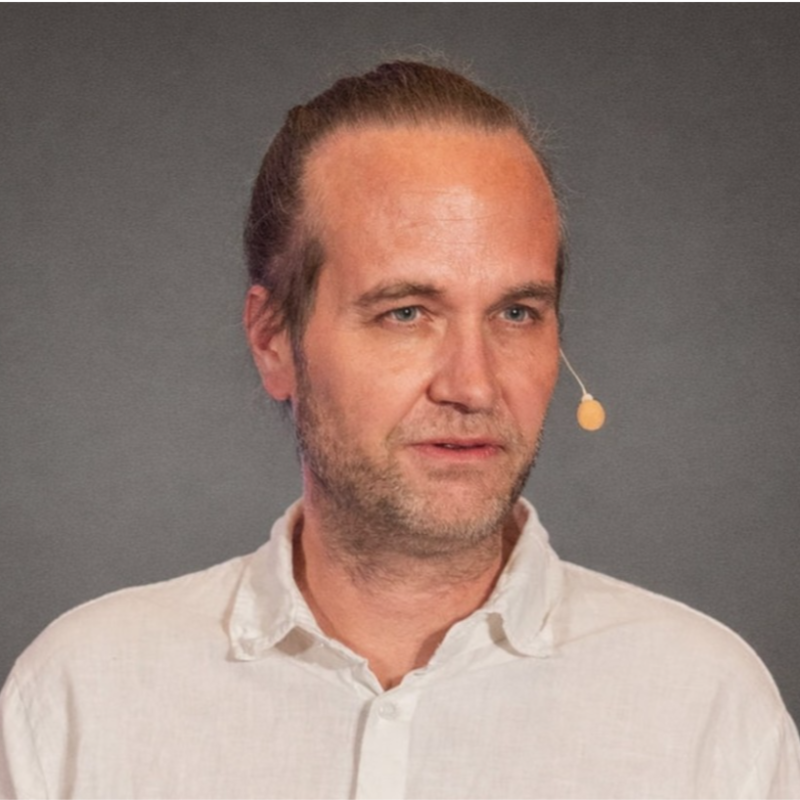

A few days after giving a TEDx talk in Lisbon, I recorded this episode to reflect on what I learned. Not as a recap of the talk itself, but as a behind-the-scenes look at what TEDx forces you to confront as a speaker and strategist.
If you are building a brand, leading a team, or trying to stand out in a world shaped by AI and endless content, these lessons on clarity, messaging, and focus matter more than ever.
 Key Takeaways
- Most messages fail because they try to say too much
- TEDx forces you to focus on one clear idea
- If your message only works when you sell, it is not strong enough
- Presence and energy matter as much as content
- Clarity is becoming a competitive advantage in the age of AI
 Full Transcript
Why TEDx Forces One Idea
Hello everyone, and welcome to the Web3 CMO Stories podcast. My name is Joeri Billast, and I am your host.
Today’s episode is a solo episode, recorded a few days after my TEDx talk in Lisbon.
I want to share a few thoughts and lessons from that experience. Not as a recap of the talk itself, but as insights that are directly relevant if you are building a brand, leading a team, or trying to stand out in a very noisy world.
One thing I did not expect about doing a TEDx talk is how brutally it forces you to focus on just one idea.
The more I think about it, the more I realize this is exactly where most marketers and leaders struggle today.
We try to say too much.
We try to cover everything.
Related Posts:





And as a result, nothing really lands.
No Selling and Why It Matters
When I was first invited to give the talk, my instinct was to approach it like a keynote.
I had a structure. I had ideas. I knew roughly what I wanted to say.
But TEDx is different.
You are not there to give a broad talk. You are there to deliver one clear idea that is worth spreading.
And that constraint is harder than it sounds.
About six days before the talk, I decided to restart my script completely.
Not because I did not have content, but because I was not emotionally connected enough to the message.
At the same time, I was very focused on one specific rule: you are not allowed to sell.
You cannot promote your book.
You cannot include a call to action.
If you do, your talk may not be published on the TEDx YouTube channel.
At first, that feels limiting.
But then you realize something deeper:
If your message only works when you can sell, it is probably not a strong message.
The best ideas do not need pressure.
They resonate on their own.
And this is highly relevant today.
Many brands are still trying to push messages, while the real opportunity is to create ideas that people actually want to engage with.
Presence, Energy, and the Stage
Another important lesson was how much performance actually matters.
Not just what you say, but how you show up.
The day before my talk, I went to the venue to understand the stage, the atmosphere, and the overall environment.
I also had the opportunity to do a short rehearsal.
Most of the talks that day were in Portuguese. Even though I understand some Portuguese, it still required a lot of mental energy.
By the end of the day, I was quite drained.
When I stepped on stage for rehearsal, my energy was not where it needed to be.
The next day was completely different.
I was more focused, more calm, and more intentional. I made sure I was hydrated and mentally prepared.
That made a significant difference.
It reminded me that communication is not just about content.
It is about energy, presence, and timing.
And this is something many leaders underestimate.
Precision, Discomfort, and Growth
For most talks, I do not memorize things word for word.
I know the structure. I know the key ideas. And I speak naturally.
But TEDx required a different level of precision.
The timing had to be exact.
The message had to be tight.
That felt a bit uncomfortable.
But that is often where growth happens.
Doing things that do not feel natural forces you to improve.
And because I changed my talk just six days before the event, there was some pressure.
Normally, I enjoy speaking on stage and do not feel nervous.
But this was a bit different.
Why Imperfections Feel Bigger to You
During the talk itself, I had a brief moment where I got slightly distracted.
There were some sounds in the audience, and I paused for a moment.
Afterwards, I wondered if people noticed.
No one did.
In fact, the feedback was very positive.
This is a useful reminder:
We are often far more aware of our own imperfections than anyone else.
Writing Faster with AI and Clarity
During my TEDx talk, I also briefly mentioned my book, The Future CMO.
My first book took three years to write.
The second one came together much faster.
Partly because of AI, which helped structure ideas and identify patterns across my podcast episodes.
But more importantly, because I had more clarity.
Even moments like receiving an endorsement from Philip Kotler were not just about achievement.
They were the result of clarity.
Without clarity, none of those outcomes would have happened.
Clarity as a Competitive Advantage in AI
If I zoom out and take one key lesson from this entire experience, it is this:
If you cannot express your idea clearly in 15 minutes, you probably do not fully understand it yet.
In a world where AI is accelerating everything, where content is everywhere, and where attention is limited, clarity becomes your biggest advantage.
The shift is moving from creating more content to creating ideas that actually resonate.
One Idea to Stand For
If you are building a brand, leading a team, or thinking about your positioning, the real question is not:
What else can I say?
The real question is:
What is the one idea I truly stand for?
Want to see more of my articles in Google? Add webdrie.net as a preferred source.