
Preparing a TEDx talk forces me to cut through noise and commit to one clear idea, and that pressure exposes where marketing messages often get weak. I share what changed when I could not sell from the stage, why energy and presence matter as much as words, and why clarity is the real advantage in an AI-saturated world.
• Choosing one idea and removing everything else
• Clarity as discipline rather than volume
• The TEDx no-selling rule and what it reveals about strong messages
• Creating ideas people want to engage with instead of pushing harder
• Stage presence as energy, timing, and intention
• Precision, memorisation, and why discomfort can signal growth
• Why audiences rarely notice your small mistakes
• How AI supported structure and pattern-finding in my writing process
• A simple test for understanding: explain it clearly in 15 minutes
• The positioning question: the one idea I truly stand for
Looking for the structured conversation and key takeaways for CMOs and AI marketing leaders? Read the cleaned and structured reference version here:
Transcript: Behind the Scenes of a TEDx Talk
Clarity Wins – How A TEDx Talk Forces One Message
A TEDx talk has a strange superpower: it forces you to choose one idea and cut everything else. That constraint exposes a problem many marketers, founders, and leaders face in a noisy attention economy. We try to say too much, cover every feature, anticipate every objection, and the result is a message that feels blurred. Brand clarity is not about having more talking points, it is the discipline to say less with confidence. When your positioning is sharp, your audience can repeat it, your team can align around it, and your content marketing becomes easier because every story ladders up to the same core concept. For a modern marketing strategy, that is a competitive edge because attention is limited and alternatives are endless.
One of the most useful TEDx rules is also the most uncomfortable: no pitching, no selling, no call to action. At first it feels limiting, especially if you are used to performance marketing habits where every message must convert. But the rule reveals a deeper truth about persuasive communication: if your message only works when you can sell, it probably is not strong enough. The best ideas stand on their own because they resonate, not because they pressure. That mindset shift changes how you build a brand narrative. Instead of pushing, you craft ideas people want to engage with, repeat, and share. In practical terms, it means prioritising a clear point of view, a simple promise, and proof through stories rather than hype.
Another lesson is that communication is not only content, it is energy. Showing up matters: hydration, focus, calm, and intention can change how your message lands. Leaders often underestimate presence, timing, and the physical reality of speaking, whether that is on a stage, in an all hands meeting, or on a sales call. Performance is not theatrics, it is whether your delivery matches the meaning of your words. Preparation also changes under tight constraints. When you must hit a precise time limit, you cannot rely on loose structure alone. You have to be deliberate, and that can feel unnatural. Yet growth often sits inside what feels uncomfortable, because precision demands understanding.

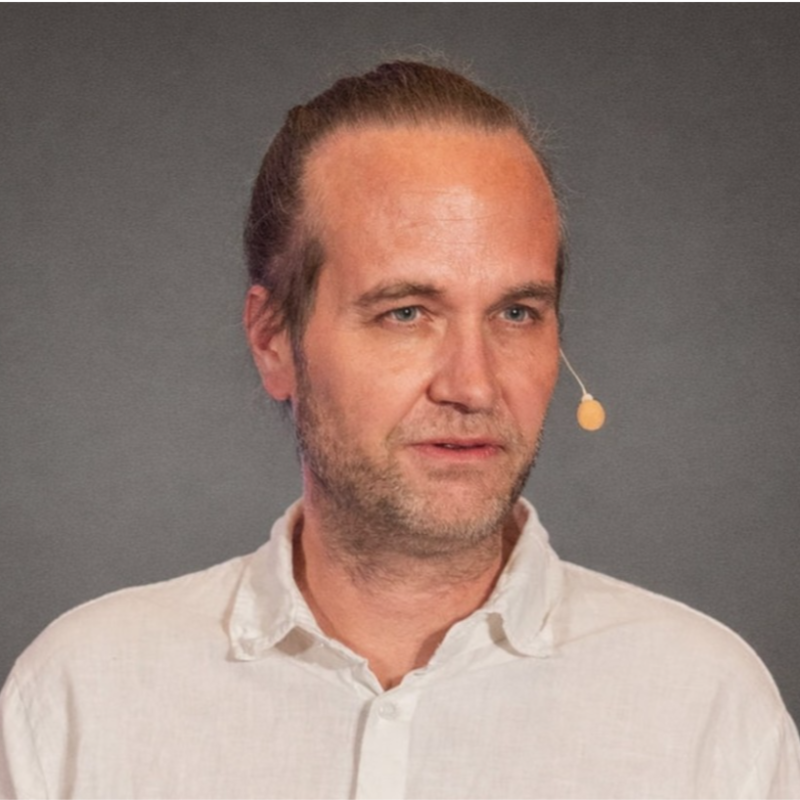
Joeri Billast, Speaker at TEDx Chiado
Perfection is another trap. A small distraction, a brief pause, a moment that feels huge to you often passes unnoticed to everyone else. That is freeing for public speaking and for marketing leadership. Your audience experiences the whole, not your internal self critique. A related theme is clarity through making. Writing and publishing work sharpens ideas over time. Tools like AI can speed up the process by helping with structure, pattern finding, and synthesis across your own content such as podcast episodes and notes. But the real accelerator is clarity, not the tool. As AI marketing accelerates content creation, the advantage shifts from creating more to creating what resonates. If you cannot express your idea clearly in 15 minutes, you probably do not fully understand it yet. The strategic question becomes simple: what is the one idea you truly stand for?
Want to see more of my articles in Google? Add webdrie.net as a preferred source.