
We explore how to build a personal brand in an AI-saturated world by leading with voice, taste, and trust rather than volume. Chris Do shares practical ways to find clarity, avoid plagiarism traps, price on value, and jump the next curve with confidence.
• AI lowers creation cost but not lived voice
• Dangers of early omnichannel without clarity
• Earning attention through restraint and story
• Copying in private vs plagiarism in public
• Reps before perfection to unlock quality
• Practical ways to build taste and signal value
• What “real” means with AI and retouching
• Trust triangle of authenticity, empathy, logic
• value-based pricing framed by outcomes
• teach-first content instead of disguised ads
• adapt to disruption and jump curves like Netflix
• where to follow Chris across platforms
This episode is sponsored by Metricool. Use the special code JOERI to get 30 days of Metricool Premium for free!
Looking for the structured conversation and key takeaways for CMOs and AI marketing leaders? Read the cleaned and structured reference version here:
How AI Changes Personal Branding, Trust, and Marketing
From AI Hype To Human Voice: Chris Do On Clarity, Taste, And Trust
The modern content landscape moves at a pace that punishes hesitation and rewards noise, yet the core of brand building remains stubbornly human. Chris Do argues that AI lowers the cost of making and posting, but it cannot replicate your lived experience, philosophy, or voice. When creators try to scale before they know what they stand for, they flood feeds with what he calls idea pollution. The antidote is not to shout louder but to speak in a way that invites people to lean in. This posture lets a brand claim real mental real estate without spectacle: clarity of message, restraint in tone, and stories that reflect real experience. Listeners hear how this applies to personal brands, founders, and marketers who want durable awareness that grows with them, not growth that outpaces substance.
Creators often ask whether to define the brand first or just start producing. Chris’s answer is pragmatic: it depends on intention, commitment, and support. Quantity precedes quality because repetition sharpens thought. He reframes social media as public journaling, where daily observations become a log of thinking in motion. Over time, the craft catches up with the message. Obsessing over polish too early becomes a stall tactic, while small, steady outputs create the conditions for clarity to emerge. Mentors and teams can accelerate this path by imparting judgment and pattern recognition without outsourcing the core voice that must remain personal to be credible.
Taste becomes the quiet multiplier in a market that buys with its eyes. Humans are hardwired for visual processing, and design signals—typography, color, materials—set expectations about quality and price before a word is read. Walk any liquor aisle and the packaging telegraphs perceived value long before a sip. That’s why non-designers must train taste like a muscle: compare good-better-best references, analyze why choices work, and notice how form cues substance. This sensitivity extends to the “real vs. AI” debate. Advertising has long relied on retouching, compositing, and mockups; the question is not whether an image is pure but whether it is on-brand, tasteful, and effective. Trust shifts from the pixel level to the person: do we believe the maker?

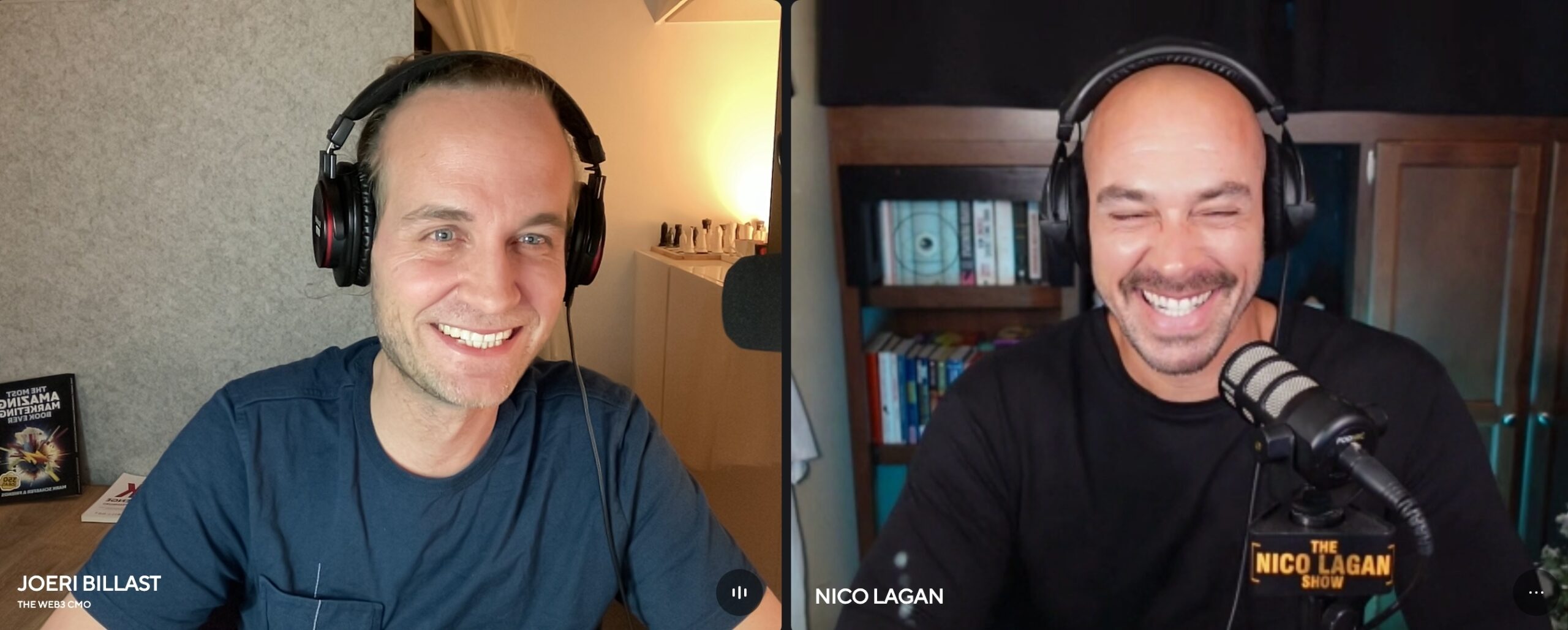
Joeri Billast and Chris Do at Atomicon in 2023
Trust itself rests on three pillars: authenticity, empathy, and logic. Authenticity asks whether you are who you claim to be, without corporate masks. Empathy tests whether you act in the audience’s best interest, even if it costs a sale. Logic demands clear, followable reasoning. High-trust brands score across all three. This matters when buyers suggest AI can do the job cheaper. If a client truly has an equal, they would use it; often it’s a negotiation gambit. Value-based pricing reframes the conversation to outcomes: if marketing lifts revenue or conversion, what proportion of that delta is fair? Shared risk aligns incentives, turning cost into investment.
Finally, the ability to adapt separates Blockbuster from Netflix. Each wave of technology obsoletes a comfort zone, and firms that protect the old curve rarely lead the new one. AI is such a curve. Early adopters keep an open mind, use tools to extend skill, and reinvent their delivery instead of polishing legacy methods. For creators, the last-mile mistake is making content that masquerades as ads. Teaching, sharing process, and answering real problems build authority organically. Give value freely and the market responds with trust, conversation, and qualified demand. Speak softly, practice daily, refine your taste, and price the change you create—this is how a brand stays discoverable without becoming disposable.
Want to see more of my articles in Google? Add webdrie.net as a preferred source.