

Anna Bravington and I dig into why so many useful products fail to sell and why the real issue is often missing marketing fundamentals, not a “bad” idea. We share a practical way to diagnose whether the leak is your offer, your visibility, or your clarity, plus how to hear the truth from customers without letting ego take over.
• Confusing features with buyer reasons and outcomes
• Diagnosing the real leak across offer, visibility, and clarity
• Using customer interviews and lost-deal calls to find the block
• Separating persistence from sunk cost stubbornness
• Positioning against workarounds and the “do nothing” option
• Handling uncomfortable feedback by spotting patterns, not outliers
• Using AI voice of customer research while avoiding biased prompts
• Remembering the customer is not always right about solutions
• Why founders avoid visibility and retreat into busy work
• Building accountability so discomfort does not kill momentum
If you think that this episode is useful for people around you, other entrepreneurs, marketers, maybe your neighbor, be sure to share this podcast episode with them. If you're not yet following the show, well, this is a good moment then to hit the subscribe button. If you haven't given me a review yet, it really helps a lot if you could give me these five stars if you like the show.
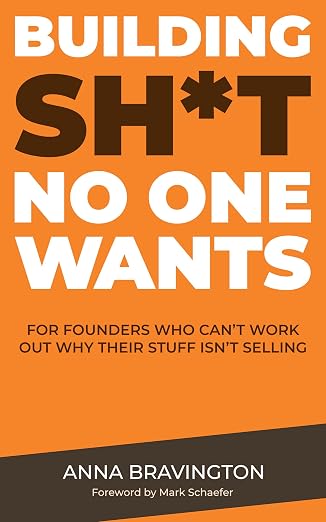
Most Products Do Not Fail Because They Are Bad
Founders often assume a product is “bad” when it does not sell, but the more common problem is that buyers never get a clear reason to care. Anna Bravington’s core point is simple: many teams build something genuinely useful, then skip the basics of go-to-market. They either do not market it at all, or they talk in a wall of technical features instead of outcomes and urgency. If your launch messaging sounds like a spec sheet, you are forcing the customer to do the translation work. Strong startup marketing starts with the “why”: the pain it removes, the time it saves, the risk it reduces, and the identity it supports. When that story is missing, even great products look optional, and optional products rarely win.
A practical way to stop guessing is to diagnose where the leak is happening: offer, visibility, or clarity. Visibility means the right people actually encounter you through content, partnerships, communities, SEO, or outbound. Clarity means they quickly understand what you do, who it is for, and why it matters. Offer means the proposition is compelling once they understand it: pricing, packaging, proof, risk reversal, and the “why now”. Anna recommends using real data and direct conversations to find the blockage in your funnel rather than rebuilding everything. Call leads who inquired but did not convert, or ask first customers what almost stopped them. If you cannot get honest feedback as the founder, use a third party to run customer interviews. Look for patterns, not one-off complaints, and treat feedback as signal, not an attack on your identity.

Anna Bravington
The episode also explores the emotional trap of entrepreneurship: persistence can turn into sunk cost stubbornness when your product becomes your “baby”. Detaching your ego from the business makes it easier to pivot messaging, narrow the ideal customer, or change the offer without spiralling into shame. Another major reframing is competition. Your alternatives are not just direct competitors; they include imperfect workarounds, other categories, and the most powerful rival of all: doing nothing. Customers may not even be “problem aware” because the pain is normalised inside their current process. That means positioning is often an education job. You are not selling a tool, you are selling a better way to live or work, with a clear before-and-after.
AI-powered voice-of-customer research and synthetic customers can accelerate that learning by scanning broad datasets and surfacing language, tone, and objections you might miss. Used well, AI can reduce founder blind spots and highlight what the market already says on forums and social channels. Used poorly, it becomes an echo chamber that confirms assumptions, especially if prompts subtly bias the output. The antidote is disciplined prompting, triangulating with human interviews, and staying focused on problems rather than letting customers design your solution. Finally, Anna addresses why so many talented technical founders remain invisible: fear, discomfort, and lack of training across marketing, sales, and finance. The path forward is action with accountability. Get comfortable being uncomfortable, take the first visible step, and build a community that holds you to what you said you would do.
Want to see more of my articles in Google? Add webdrie.net as a preferred source.