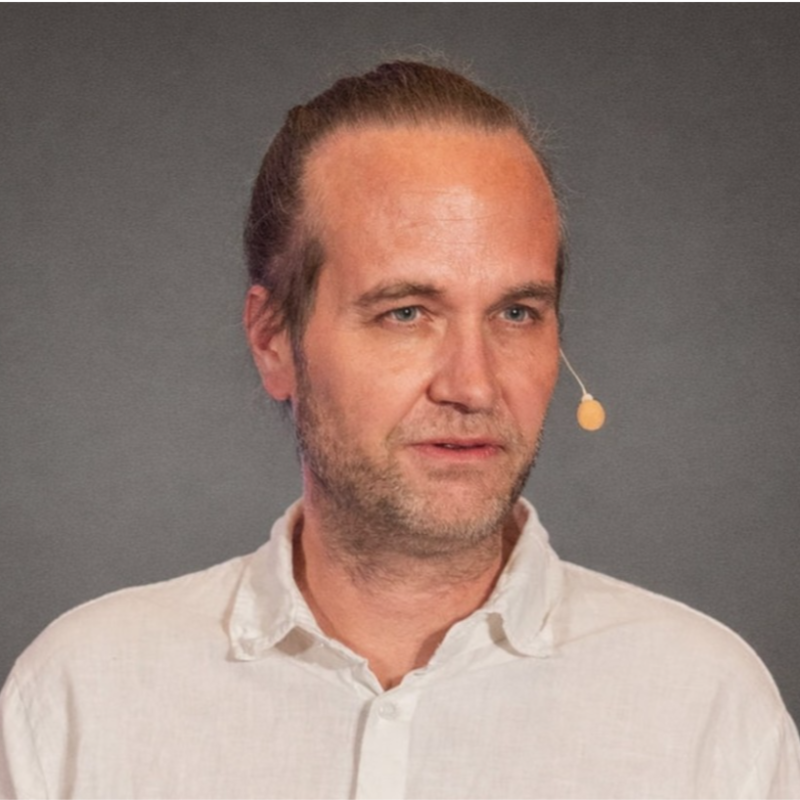
I talk with B2B brand strategy advisor Roxana Hurducas about why brand clarity is the foundation that keeps strategy, messaging, and actions aligned. We dig into perception research, trust, crisis communication, and why being more human beats sounding “professional” when everyone else is turning generic.
• Founders often see the product through a biased lens, which blocks real customer empathy • Branding commonly gets reduced to logos and campaigns, while strategy lives in positioning and differentiators • Warning signs of lost brand clarity, including doing too much or doing too little • Brand perception research basics, including clean questions and stakeholder-specific prompts • Protecting a distinct brand voice in an AI-driven content world by anchoring identity and audience focus • Building trust by keeping messages and actions consistent over time • Mixing empathy with data in crisis communication to avoid sounding cold or out of control • Why companies cut marketing when markets shrink, even though strategic communication matters most • Founder personal brand as a startup locomotive, then a necessary separation as the company grows • Making events and content serve the audience, with human to human energy instead of “boring to boring”
Brand clarity is not a “nice to have” for B2B marketing teams; it is the operating system that keeps positioning, messaging, and decisions coherent over time. When a company has brand clarity, it knows the why, what, how, and when behind its actions, which creates rhythm, consistency, and trust. Without it, teams swing between doing too much and doing too little: endless campaigns that feel scattered, or silence because no one is sure what to say. Both extremes weaken brand perception, confuse buyers, and make it harder to earn credibility in competitive markets where attention is scarce and expectations are high.
A recurring problem in modern branding is confusing brand strategy with visuals and messaging. Logos, fonts, colors, and campaigns are visible outputs, but they are not the strategy itself. Real brand strategy includes positioning, differentiators, brand attributes, brand personality, tone of voice, and a clear unique value proposition. When teams skip that foundation, they chase novelty and dilute identity, because every new idea feels equally valid. A strategy is long term: you adapt to context, but you do not abandon the red line that connects what you say, what you ship, and how you show up across channels.
Click to play
To regain clarity, brand perception research has to be designed with discipline. Founders and marketing leaders often focus on product satisfaction, but brand research should also capture the bigger “feel” of the company, not just the feature set. The best customer interviews use clean questions that do not lead the witness, and they work even better when asked by a neutral party. Ask customers, employees, and partners different questions so you can spot blind spots early. Simple prompts outperform complex surveys: one word to describe the brand, how it feels different from alternatives, what feels missing, and what they would add. Center questions on their needs and emotions, because people stop trying to please you and start telling the truth.
AI makes the clarity gap more visible because it can generate endless generic content at scale. The defense is not “more content” but a distinct brand voice grounded in identity: who you serve, why you exist, and why you should be chosen. Trust becomes the real marketing advantage when content is abundant. Trust is built by matching messages with actions, repeatedly, over time, especially under pressure. In crisis communication, empathy plus data is powerful because people feel first and think second; data alone feels cold, empathy alone feels uncontrolled. The same human-first principle extends to personal branding and events: founders can transfer authority early on, then let the company brand stand on its own, and B2B events work best when they stop being “B2B” and become human to human experiences that people actually remember.
Joeri Billast and Roxana Hurdacas during the Sintra Synergies retreat (April 2026) in Portugal
Fractional CMO and AI Visibility Strategist. Author of The Future CMO, endorsed by Philip Kotler. Host of the Web3 CMO Stories podcast and founder of the Sintra Synergies retreat.
About the author
Joeri Billast
Joeri Billast is a Fractional CMO and AI Visibility Strategist based in Sintra, near Lisbon. He is the author of The Future CMO, endorsed by Philip Kotler, and hosts Web3 CMO Stories. The Library is where he publishes his articles, interviews and briefings.