
What if most of the economy can be automated without anything we’d call real general intelligence? That provocative idea launches a candid tour with Ben Goertzel, CEO of SingularityNET, through the difference between LLM “breadth” and the kind of generalization that marks true AGI.
• AGI versus LLMs and why generalization matters
• Economic impact of breadth without true reasoning
• Hybrid architecture: neural nets, logic, evolution, knowledge graphs
• Decentralized AGI as a safety and robustness strategy
• On‑chain AI with ASI chain and MeTTa language
• Building trust with formal verification and reputation systems
• Human–AI co‑creation in music and beyond
• Openness versus control under a proactionary lens
• Jobs, access, and the future meaning of work
• Resources for SingularityNET, Hyperon, and ASI chain
You can go to singularity.net or superintelligence.io and you can find out about Hyperon and the ASI chain and all the other stuff that my various teams are now building to try to bring about a beneficial decentralized AGI and ASI future
The conversation begins with a clear line drawn between what current large language models can do and what artificial general intelligence should be. LLMs impress because of their vast training data and breadth of surface capabilities, but they struggle to leap beyond prior examples the way humans do. That gap matters. It explains why LLMs can automate a large slice of repetitive work while leaving frontier science, culture shifts, and true invention for systems that can generalize. The message is nuanced: the economy will feel massive gains from today’s models, yet real AGI needs more than remixing. It needs grounded reasoning, symbolic structure, and creative leaps that transcend the data that formed it.
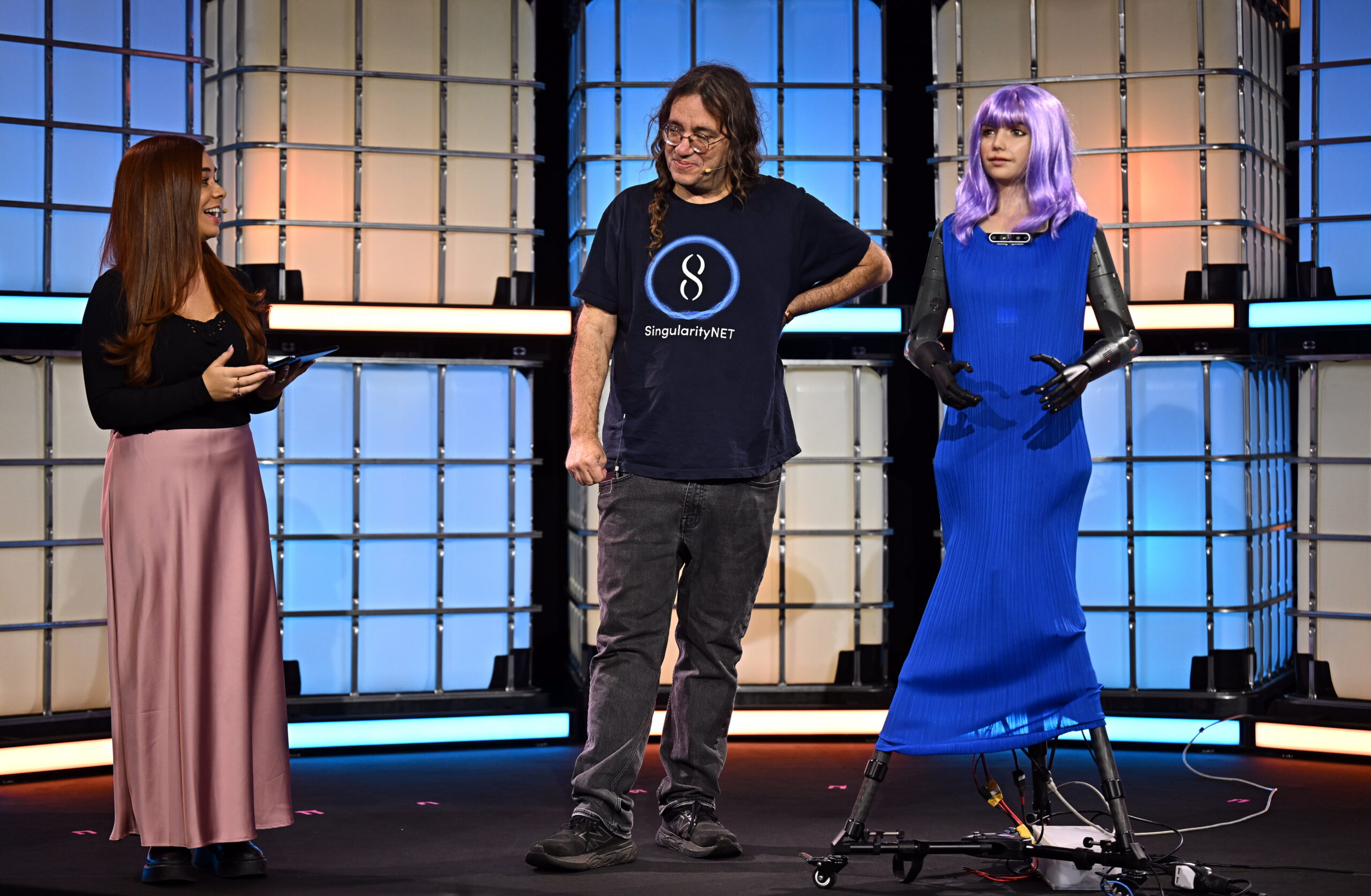
13 November 2025; Jessica Edwards, Web Summit; left, and Ben Goertzel, CEO and Founder, SingularityNET with Desdemona the robot, on Experience Summit Stage during day three of Web Summit 2025 at the MEO Arena in Lisbon, Portugal. Photo by Sam Barnes/Web Summit via Sportsfile
From there, the discussion turns to how we actually reach that next level. One proposal pairs deep neural nets with logic engines, evolutionary learning, and a huge knowledge graph, all interwoven so strengths cross-pollinate. This hybrid approach, known as Hyperon, aims to add missing ingredients like formal reasoning and nontrivial creativity to the pattern-recognition power of deep nets. The goal is not to discard LLMs but to scaffold them with components that reason, search, and invent. This practical research stance coexists with near-term applications in areas like music, where AI can augment bands, help generate ideas, and unlock playful experimentation without trying to replace human expression.

13 November 2025; Ben Goertzel, CEO and Founder, SingularityNET, on Experience Summit Stage during day three of Web Summit 2025 at the MEO Arena in Lisbon, Portugal. Photo by Sam Barnes/Web Summit via Sportsfile
Decentralization becomes a central pillar. If the first real AGI sits under one company or government, perverse incentives and fragility follow. Open, decentralized infrastructure spreads control and reduces singular failure points. The ASI chain embodies this philosophy by letting AI processes run on-chain, not merely coordinate off-chain. To do this, the team built a new AGI language, MeTTa, and repurposed it as a smart contract language, enabling formal verification and new forms of composability. Trust gains a mathematical layer through proofs and a social layer through an integrated reputation system where humans and AIs can rate and be rated in a transparent economy.
Culture and narrative still matter. An instructive moment came when a robot-led band opened for Macy Gray. The first crowd rejected it. The second embraced it after the host framed the performance as exploration, not replacement. Same music, different context. The lesson applies to AI deployments across industries: explain the purpose, set expectations, and show benefits beyond cost cutting. As tools like automated mixing become widely available, more musicians can ship finished work, even as some traditional roles shrink. That pattern repeats across fields: capability rises, access expands, and certain jobs compress. Society then must solve income, identity, and meaning while humans choose to keep doing work that feels rewarding, even when machines can do it too.
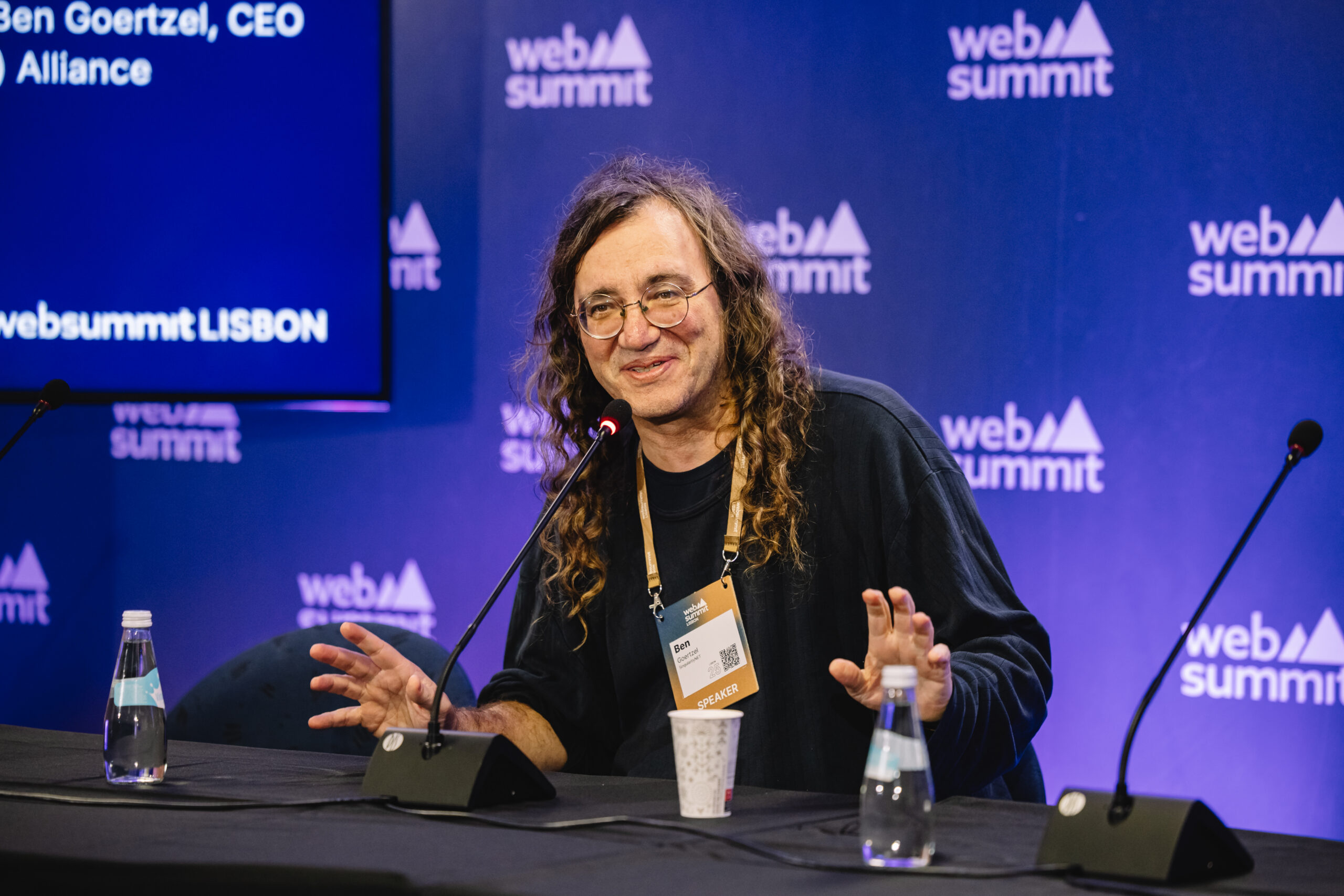
This press conference was held in the Media Village. Media event only.
Related Posts:






Openness draws risk, but the proactionary view balances the cost of inaction against the cost of action. Open science has propelled humanity despite potential misuse, and the same calculus may apply to open AI. With decentralized governance, formal verification, and reputation, trust can be embedded in the stack rather than borrowed from institutions. The long arc points toward human and machine creativity blending in art, research, and daily life. As more work automates, people will do things because they want to, not because machines cannot. That future demands we design infrastructure and incentives now so that progress broadens access, protects agency, and channels collective intelligence toward a safer, smarter world.

This press conference was held in the Media Village. Media event only.