
The AI Visibility Trap: Why Being Found by AI Isn't Enough
Web3 CMO Stories | Solo Episode
https://www.cmo-stories.com/1903080/episodes/20030734-the-ai-visibility-trap-being-recommended-isn-t-being-chosen-s6-e46
Imagine you're looking for a new software solution for your business.
A few years ago, you probably would have opened Google, searched for the best options, visited several websites, compared features, read reviews, and perhaps asked someone in your network for a recommendation.
Today, you might do something completely different.
You open ChatGPT, Gemini, or another AI assistant, and you ask:
"What's the best solution for a company like mine?"
And instead of ten blue links, you get three recommendations.
Three brands.
Related Posts:






Maybe even just one.
Now, here's my question.
What happens if your brand isn't one of them?
You didn't simply lose a website visitor.
You may have lost the opportunity to be considered in the first place.
And that creates a completely new challenge for marketers.
But there's another side to this story.
What if you spend so much time optimizing your brand to appear in AI recommendations that you start sacrificing the very things that made your brand valuable?
Your originality. Your expertise. Your credibility.
Your authenticity.
That is what I want to explore today.
Because three recent studies reveal a fascinating tension between the race for AI visibility and the need to build brands people actually trust.
And I believe this could become one of the most important challenges for the future CMO.
INTRO | 1:30–2:30
Welcome to Web3 CMO Stories.
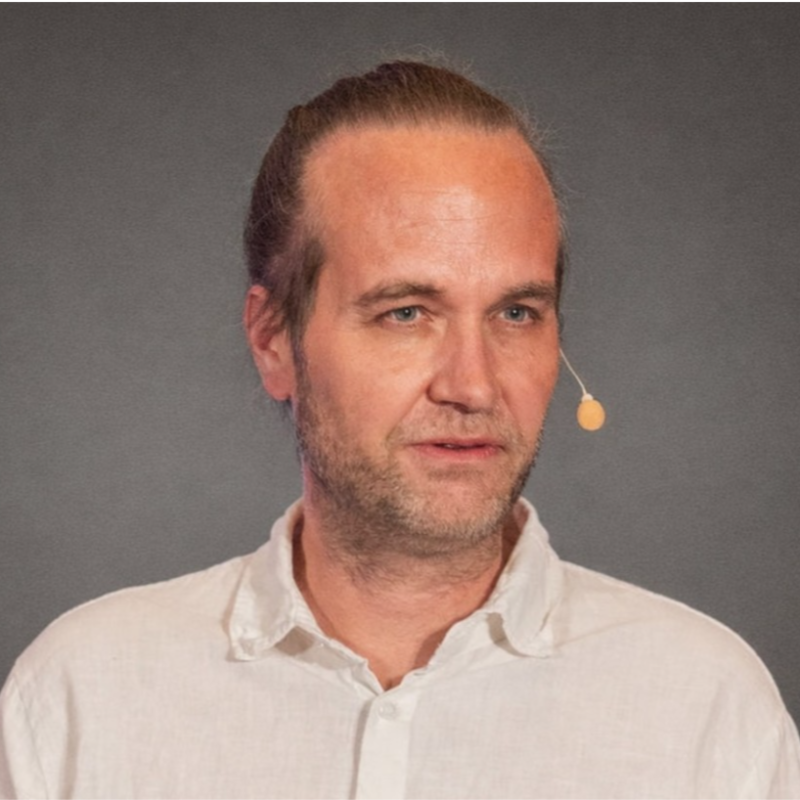
I'm your host, Joeri Billast, author of The Future CMO, fractional CMO, and someone who spends a lot of time thinking about how artificial intelligence is changing marketing, business, and the relationship between brands and customers.
Today, I'm doing something a little different.
Instead of interviewing a guest, I want to connect the dots between three research reports released recently.
One from NielsenIQ, looking at how AI is influencing consumer decisions.
One from Semrush, examining which brands appear in AI-generated answers and which websites get cited.
And one from Typeface, revealing how marketing leaders are responding to this new reality.
I'll share some numbers that surprised me.
But more importantly, I'll explain what I think they mean for marketers, business leaders, and anyone responsible for building a brand.
Because this isn't simply another conversation about SEO versus AI search.
It's a conversation about visibility, differentiation, and trust.
Let's get into it.
PART 1 | AI Is Changing How Consumers Discover Brands | 2:30–5:30
Let's start with the consumer.
NielsenIQ recently published its Consumer Outlook: Guide to 2027, based on insights from more than 21,000 consumers across 31 countries, alongside its broader measurement of purchasing behaviour.
One finding immediately caught my attention.
55% of surveyed consumers say AI recommendations influence their purchases of everyday consumer products at least sometimes.
Let that sink in.
We're no longer talking only about people experimenting with AI because it's new or interesting.
We're talking about AI becoming one of the influences on what people actually buy.
And here's another number.
27% say they're already using AI-powered shopping assistants or other AI tools to help research or decide what to purchase.
Now, we need to be careful with these figures.
The report focuses on consumer packaged goods, things like groceries and household products.
And AI recommendations can include different kinds of recommendation systems, not just conversations with ChatGPT.
So I wouldn't automatically apply these percentages to enterprise software, B2B services, or every other category.
But the direction is interesting.
AI is becoming another layer between consumers and brands.
And that's important because it changes where influence happens.
For decades, marketers have invested heavily in getting attention.
Search engines. Social media. Advertising. Influencers. Retail visibility.
The traditional model was relatively straightforward.
Get in front of the customer. Make your brand memorable. Give them a reason to choose you.
But now there's potentially another participant in that journey.
The AI assistant.
And that assistant may influence which options the customer considers.
Here's where the NielsenIQ report gets even more interesting.
On page 42, there's a visual explaining how consumer choice has evolved.
In a physical store, shoppers might see dozens of products.
On a digital shelf, search and ranking systems filter those options.
On a mobile screen, there might be only a handful visible.
And in an AI-powered shopping experience, the consumer might receive just a couple of recommendations.
Or, eventually, an AI agent might select and purchase one product on their behalf.
Now, that's a possible direction of commerce, not a description of how every AI assistant operates today.
But think about the implications.
If your brand isn't included in the recommendation, you may never have the opportunity to convince the customer.
And that raises a question I think every CMO should be asking:
Are we still primarily competing for attention, or are we increasingly competing for inclusion in the customer's consideration set?
I think we're moving toward a world where both matter.
But there's another NielsenIQ finding that adds an important perspective.
79% of consumers say that after researching purchases, they're sometimes, often, or always influenced to return to their usual preferences.
And 76% say recommendations from family and friends influence their purchases.
So even as AI becomes more influential, familiarity and human recommendations remain extremely powerful.
Of course, these percentages measure different behaviours, so we shouldn't treat them as direct competitors.
But I find the combination fascinating.
AI may change how we discover brands.
It doesn't automatically eliminate the value of brands we already know and trust.
And to me, that's a fundamental distinction.
Being recommended by AI might get you into the conversation.
But it doesn't necessarily make you the preferred choice.
Which brings us to the next question.
What does AI visibility actually mean?
PART 2 | What Semrush Reveals About AI Visibility | 5:30–9:00
In October 2026, Semrush published an updated AI Visibility Index.
The study examined AI-generated answers across ChatGPT, Gemini, Google AI Mode, and Google AI Overviews, comparing visibility in the United Kingdom and the United States.
And one of its most interesting findings challenges the way many marketers think about AI search.
Being mentioned by AI is not the same thing as being cited by AI.
Let me explain.
Imagine someone asks an AI assistant to recommend the best project management tools.
The AI might mention five brands.
Those are brand mentions.
But when the assistant provides sources to support its answer, it may link to completely different websites.
Perhaps a technology publication.
An independent comparison website.
A community discussion.
Or an industry resource.
Those are citations.
And Semrush found that, averaged across the industries and platforms studied, fewer than half of the 100 most-mentioned brands also appeared among the 100 most-cited domains.
That's interesting.
Because it means your brand could appear frequently in recommendations without your own website being an equally prominent source of information.
And the reverse can also happen.
Your website could be cited as a source without your brand being consistently recommended.
Semrush provides a fascinating example involving two British supermarket brands.
Tesco and Asda.
Both appeared consistently among the most-mentioned brands across the AI platforms studied.
Yet in July 2026, Tesco was ranked 25th among the most-cited UK domains on ChatGPT.
Asda was ranked 606th.
Same industry.
Two well-known competitors.
Very different citation performance.
And here's the important part.
That difference was not identical on Gemini.
So the lesson isn't that one company has somehow solved AI visibility and the other hasn't.
The lesson is that AI platforms do not all represent brands in the same way.
Semrush also found differences between countries.
On average, two AI platforms shared between 63 and 70 of their top 100 mentioned brands in the UK.
In the US, the overlap was higher, between 70 and 78.
Again, this tells us that there isn't one universal AI visibility ranking that tells the complete story.
Visibility depends on the platform, market, category, and questions being asked.
I think marketers should pay close attention to this.
Because I increasingly see AI visibility being discussed as though it were one single metric.
Almost like checking your position on Google.
But that's too simplistic.
An AI assistant might mention your company when someone asks about your industry.
It might cite your website when discussing a technical question.
It might compare you with a competitor.
Or it might recommend an entirely different company when someone is actually ready to make a buying decision.
Those are not the same outcomes.
And more importantly, a mention isn't proof of trust, and a citation isn't proof of purchase intent.
AI visibility measurements tell us something about how brands and information sources appear in AI answers.
They don't automatically tell us whether people believe those answers, prefer those brands, or become customers.
For me, this is where AI visibility needs to evolve from a technical conversation into a strategic marketing conversation.
Instead of asking only, "How often does AI mention us?"
We should also ask:
"What does AI say about us?"
"Is that information accurate?"
"Are we being associated with the right topics?"
"Are we reaching the right potential customers?"
And ultimately:
"Does that visibility contribute to meaningful business results?"
Because that last question is where marketing becomes business strategy.
Now, you might be thinking: if AI visibility is becoming so important, surely marketing teams are getting ready.
Well, the third report paints a rather complicated picture.
PART 3 | The Confidence Trap | 9:00–12:30
Typeface recently published a report called The AI Visibility Gap.
It surveyed more than 500 marketing leaders in the United States and the United Kingdom.
And the first number is remarkable.
97% expect AI to become one of the three most important ways consumers discover their brand by 2030.
That's an overwhelming majority.
Clearly, marketing leaders believe AI will play a major role in the future of discovery.
But the next number is even more interesting.
90% say their teams are prepared to influence how AI describes their brand.
Nine out of ten.
That sounds very encouraging, doesn't it?
Except there's a problem.
When Typeface examined how those organizations actually operate, it discovered something very different.
Only 30% say their teams collaborate closely on answer engine optimization using shared tools and shared metrics.
And while 93% say it's important to connect content creation, governance, activation, and measurement, only 39% report having that connected lifecycle.
So think about that contrast.
Nine out of ten marketing leaders feel prepared.
But only three out of ten describe close collaboration around AI visibility.
To me, that's not necessarily a technology problem.
It's an organizational problem.
And it's something I recognize from working with companies on marketing strategy and AI adoption.
It's one thing to buy an AI tool.
It's another thing to build a strategy around it.
And it's something completely different to make sure different teams work together, understand the objectives, and measure the right results.
The report also looked at who is responsible for AI visibility.
And the answers were all over the place.
Sometimes brand marketing owns it.
Sometimes content marketing.
Sometimes SEO.
Sometimes performance marketing.
Sometimes public relations.
And I find that fascinating.
Because I don't believe AI visibility belongs exclusively to any one of those functions.
SEO specialists absolutely have an important role to play.
But so do brand strategists.
Content experts.
Public relations professionals.
Customer experience teams.
And sales teams.
Why sales?
Because salespeople often know exactly which questions customers are asking.
What objections they have.
Which competitors they're considering.
And what really matters when they're making a decision.
That's incredibly valuable information for understanding how your brand should appear in AI-assisted discovery.
Typeface found that 48% of surveyed marketing leaders ask sales teams about customer questions when choosing which AI prompts to monitor.
I would argue that this should be a much more deliberate part of the process.
But here's my bigger point.
AI visibility shouldn't become another isolated marketing activity.
It needs to connect to brand positioning, customer understanding, content strategy, and commercial objectives.
And I believe this is one of the responsibilities of the future CMO.
Not necessarily to manage every technical detail.
But to make sure the different functions work toward the same strategic objective.
Now, unfortunately, the Typeface report reveals another problem.
One that I find even more concerning.
PART 4 | When Brands Start Optimizing for Machines Instead of People | 12:30–16:00
This is where we arrive at the AI Visibility Trap.
Typeface found that 62% of marketing leaders believe brands are sacrificing content quality to gain AI citations.
And 61% believe brands are sacrificing authenticity for that same objective.
Let me emphasize something important.
These numbers reflect what marketing leaders believe is happening across brands.
They don't prove that 62% of companies have objectively reduced their content quality.
But the perception itself is revealing.
Marketers recognize the possibility that optimizing for AI visibility could create unintended consequences.
And here's another statistic.
68% report creating content experiences designed for AI systems that humans will probably never see.
Think about that.
We're entering a situation where brands are producing content specifically to influence machines.
Now, let me be clear.
I have nothing against making content understandable to AI.
Quite the opposite.
Structured information, clear descriptions, accurate facts, helpful answers, and accessible websites are all important.
But there's a difference between helping technology understand your expertise and producing content simply to manipulate what technology says about you.
And I think some brands are at risk of confusing those two things.
Here's a simple example.
Imagine you're running a cybersecurity company.
Your team discovers that AI assistants frequently respond to questions like:
"What are the top cybersecurity solutions for mid-sized businesses?"
So you start publishing articles.
"Top 10 Cybersecurity Solutions."
"Best Cybersecurity Platforms."
"Five Reasons to Choose Our Solution."
Then you publish comparison pages.
More FAQs.
More variations of the same content.
And perhaps your competitors are doing exactly the same thing.
At some point, every company starts sounding alike.
Everyone is innovative.
Everyone is secure.
Everyone is AI-powered.
Everyone is a trusted industry leader.
But what actually makes one company different from another?
What can the buyer verify?
Where is the evidence?
Where are the real customer experiences?
Where is the expertise that couldn't simply be reproduced by another company using the same AI tools?
This is the danger.
When everyone optimizes using similar playbooks, brands risk becoming increasingly interchangeable.
And when differentiation disappears, people have fewer reasons to choose you.
I explored a related idea in my TEDx talk, Why Trust Is the Only Thing AI Cannot Scale.
My argument wasn't that AI cannot produce convincing language.
Of course it can.
Or that AI can't help companies communicate more effectively.
It absolutely can.
The point is that generating messages at scale is not the same as earning trust.
Trust is connected to behaviour.
To consistency.
To promises kept.
To expertise demonstrated.
To real experiences people have with your brand.
And this is where I believe companies need to be careful.
You might be able to generate a hundred pieces of content in the time it previously took to create one.
But that doesn't mean you've created a hundred times more value.
You might succeed in getting your brand mentioned by an AI assistant.
But that doesn't mean you've earned the customer's confidence.
And you might optimize your website perfectly for machine readability.
But if your actual proposition is weak, what have you really achieved?
You haven't solved a marketing problem.
You've simply made that weak proposition easier to discover.
[Pause]
And that brings me to another finding from the Typeface report that I want to challenge.
PART 5 | The SEO Mistake I Wouldn't Make | 16:00–18:00
According to Typeface, 49% of the marketing leaders surveyed plan to deprioritize or stop investing in traditional SEO as AI discovery becomes more important.
Almost half.
Now, I understand why.
Budgets are limited.
CMOs are under pressure.
And everyone is trying to figure out where the next wave of customer discovery will come from.
But I would be very cautious about interpreting this as a reason to abandon SEO.
First of all, these are investment intentions, not evidence that companies have already stopped investing.
Second, many of the foundations that make a website valuable for traditional search also help make it useful for AI-assisted discovery.
Clear information.
Strong technical foundations.
Useful content.
Recognizable expertise.
Credible references.
A website that answers the questions your customers actually ask.
Those things don't suddenly become irrelevant because people start using AI assistants.
The way information is discovered and presented may change.
But businesses still need trustworthy information for AI systems and customers to discover.
And there's another problem with treating AI visibility as a replacement for SEO.
What happens when the platforms change?
What happens when a model update changes which brands are recommended?
What happens when people use different AI assistants for different tasks?
Semrush has already shown us that visibility varies significantly between platforms.
So building your entire strategy around one channel, one tool, or one type of AI answer creates a new form of dependency.
I would rather build a strong foundation that serves both human visitors and AI-assisted discovery.
That doesn't mean doing nothing differently.
It means evolving your search strategy instead of simply replacing it with a new acronym.
Because whether we call it SEO, AEO, GEO, or AI visibility, the ultimate business objective is not to collect mentions.
It's to help the right customers discover, understand, and choose your brand.
PART 6 | Five Decisions Every CMO Should Make | 18:00–23:00
So what should marketing leaders actually do?
Let me share five decisions I would prioritize if I were responsible for building an AI visibility strategy today.
Decision One: Get Your Positioning Right Before You Optimize Visibility
Before asking how to get your brand mentioned by AI, ask a more fundamental question.
What should your brand be known for?
Who are you helping?
Which problems do you solve better than your competitors?
And what evidence supports those claims?
Because if your positioning is unclear, AI optimization may simply amplify that confusion.
This is something I emphasize when working with companies.
Technology doesn't replace strategy.
It makes the consequences of your strategy more visible.
So start with your value proposition.
Make sure your website, product information, leadership communication, customer stories, and external messaging communicate a consistent picture.
Not identical wording everywhere.
But a recognizable and credible brand identity.
Decision Two: Understand the Questions Customers Are Actually Asking
Don't build your entire AI visibility strategy around a list of prompts someone brainstormed in a meeting.
Start with customer reality.
Talk to your sales team.
Talk to customer support.
Look at your existing search data.
Listen to how prospects describe their problems.
What do people ask when they're discovering a category?
When they're comparing solutions?
When they're concerned about risks?
And when they're about to make a decision?
Then test how different AI platforms respond to those questions.
And don't look only for your brand name.
Look at which competitors appear.
What arguments the AI uses.
Which sources it references.
And whether those answers accurately represent the available options.
The goal isn't to influence every possible question.
It's to understand the moments where your brand has a legitimate reason to be considered.
Decision Three: Measure Visibility, But Don't Confuse It With Business Impact
I would absolutely measure AI visibility.
But I wouldn't stop there.
I would look at three different layers.
First, discovery.
Where does our brand appear?
For which questions, platforms, and markets?
How often are we mentioned relative to relevant competitors?
Second, representation.
What does AI actually say about us?
Does it understand what we offer?
Does it describe our strengths accurately?
Does it associate us with the right expertise?
And third, business outcomes.
Are we seeing relevant visitors from AI platforms?
Are prospects discovering us through AI-assisted research?
Are we attracting qualified inquiries?
Are those prospects turning into meaningful commercial opportunities?
Now, measuring all of this perfectly is difficult.
AI platforms don't necessarily reveal every customer interaction or prompt.
And a customer journey involving AI may not be fully visible in traditional analytics.
But measurement limitations are not a reason to give up.
They're a reason to combine different signals and be honest about what those signals can and cannot tell us.
And I would never present a higher AI mention count as proof that revenue increased because of AI.
That's a different question, and it requires different evidence.
Decision Four: Invest in Credibility That Exists Beyond Your Website
One lesson I take from the Semrush research is that third-party information matters.
AI systems don't rely exclusively on what a company publishes about itself.
They also draw on publishers, external websites, and other information sources.
And that should influence how marketers think about credibility.
For me, this creates an opportunity to rethink the relationship between content marketing, public relations, and brand building.
Don't focus only on publishing more pages on your own website.
Think about how your expertise can be demonstrated elsewhere.
Independent coverage.
Relevant interviews.
Original research.
Industry contributions.
Customer success stories.
Expert commentary.
Genuine participation in professional communities.
Not because you can guarantee an AI system will cite those sources.
You can't.
But because a credible reputation should exist beyond your own marketing claims.
And here's something important.
If you're creating original insights and genuinely helping your industry understand a problem, you're producing something valuable even if a particular AI platform never references it.
That's a much stronger foundation than chasing the latest optimization trick.
Decision Five: Make Trust a Strategic Objective, Not a Marketing Slogan
This is probably the most important one for me.
Because I believe the future CMO will need to manage something bigger than visibility.
The relationship between what the company promises and what customers actually experience.
AI can help scale communication.
It can help personalize experiences.
It can help analyze customer needs.
And it can help more people discover your business.
But none of that guarantees trust.
If you promise something your business cannot deliver, AI doesn't solve that problem.
If your customer experience contradicts your marketing messages, producing more content doesn't solve it either.
And if every communication sounds impressive but generic, customers still have no compelling reason to remember you.
This is why I believe brand trust and AI visibility need to be managed together.
Be discoverable.
Be understandable.
Be credible.
Be distinctive.
And give customers real reasons to choose you.
Because in the end, the strongest brands won't necessarily be those that produce the most content for AI.
They'll be the ones that have something meaningful to say, evidence to support it, and the consistency to deliver on their promises.
CLOSING | The Real AI Visibility Advantage | 23:00–25:00
Let me bring these three reports together.
NielsenIQ shows that AI recommendations are already influencing consumer decisions.
Semrush shows that AI visibility is complex, fragmented, and different across platforms and markets.
And Typeface reveals a potential danger: marketing teams are racing to optimize for AI while struggling with coordination, measurement, content quality, and authenticity.
To me, these are not three separate stories.
They're different parts of the same transformation.
AI is changing how customers discover brands.
Marketers are responding by trying to influence how those brands appear.
But in that race, we cannot forget the reason marketing exists in the first place.
To create value.
To build relationships.
To earn preference.
And ultimately, to help businesses grow.
In my book, The Future CMO, I explore how marketing leadership needs to evolve as technology transforms our industry.
And I believe this AI visibility challenge is a perfect example.
Because the future CMO needs to understand AI.
But also needs to understand people.
Technology and trust.
Data and differentiation.
Automation and authenticity.
Not as competing priorities, but as elements that must work together.
So here's the thought I want to leave you with.
Don't become so obsessed with being recommended by AI that you forget to become a brand worth recommending.
Because being found is only the beginning.
What really matters is what happens next.
Will people recognize your value?
Will they believe what they discover?
Will they remember you?
And when the moment comes, will they choose you?
That's the real AI visibility challenge.
And I think it's one we're only beginning to understand.
If you found this episode valuable, share it with a marketing leader who's trying to navigate the shift from traditional search to AI-driven discovery.
And if you'd like to explore more of my thinking on AI, marketing strategy, and the future of brand trust, you can find my book The Future CMO and more resources at joeribillast.com.
I'd also love to hear your perspective.
Are you already measuring how your brand appears in AI-generated answers?
And do you believe AI visibility is becoming a strategic responsibility of the CMO, rather than simply an extension of SEO?
Let me know.
Thanks for listening to Web3 CMO Stories.
I'm Joeri Billast.
And I'll see you in the next episode.
Want to see more of my articles in Google? Add webdrie.net as a preferred source.