
Web3 CMO Stories – Season 6, Episode 8
Guest: Kurt Uhlir
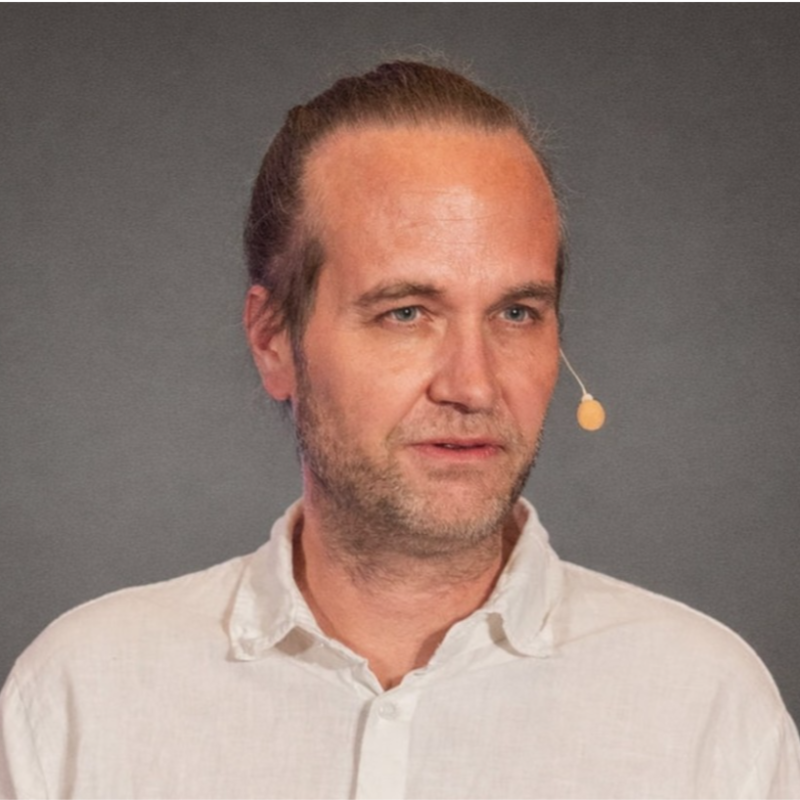
Host: Joeri Billast
Episode Overview
In this episode of Web3 CMO Stories, Kurt Uhlir shares practical insights on scaling companies, AI adoption, servant leadership, go-to-market strategy, and long-term trust in marketing.
Kurt has helped lead more than 60 acquisitions and exits, supported by an $880M IBO, and contributed to scaling companies from early growth stages to over $1.4B in revenue.
The core theme:
Growth compounds when leadership aligns time horizons, builds trust, and removes internal friction. Growth stalls when organizations chase short-term visibility, vanity metrics, or reactive decision-making.
What Causes Growth to Compound vs. Stall?
According to Kurt, most companies stall for three primary reasons:
1. Misaligned Time Horizons
Teams overinvest in short-term wins (2 to 12 months) and underinvest in:
12 to 36 month momentum systems
36+ month strategic foundations






Leaders often mix conversations across these horizons, becoming reactive instead of strategic. This makes it difficult to:
Track leading indicators
Properly test hypotheses
Allow strategies time to mature
Compounding growth requires structured thinking across all three timeframes.
2. Technology Extremes
Organizations typically fall into one of two traps:
Blindly trusting AI to replace teams
Ignoring AI due to low technical literacy
The alternative approach:
Hire tech-forward talent
Use AI as a thinking partner
Run structured experiments
Stay curious instead of defensive
When leaders create space for structured testing, growth becomes more natural and sustainable.
Where AI Breaks Trust in Marketing
AI becomes dangerous when it is used for:
High-volume content without human oversight
Automated publishing without editorial control
Manipulative personalization
Common issues include:
Hallucinated facts
Robotic tone
Inconsistent quality
Instead, AI should be used to:
Improve quality
Identify content gaps
Repurpose strategically
Surface patterns
Enhance editorial standards
Combining elite human editors with AI creates leverage. Replacing oversight with automation destroys trust.
Kurt describes reckless AI use as the equivalent of “lighting marketing cash on fire.”
AI Adoption vs. AI Transformation
Many companies believe they are adopting AI when they are simply:
Buying tools
Automating tasks
Testing workflows
True transformation happens when AI changes decision-making processes.
Examples include:
Pressure-testing strategies before launch
Simulating customer personas
Identifying blind spots
Accelerating iteration cycles
Challenging executive assumptions
AI should shorten the path from hypothesis to version 10. It should not just generate version 1 faster.
Why AI Adoption Fails
AI rarely fails because of the technology itself.
It fails because of culture.
Common leadership failures include:
No clear definition of success
No psychological safety for experimentation
Fear of transparency
Authoritative leadership styles
Most AI initiatives fail because teams fear making mistakes publicly.
If failure is punished, innovation disappears.
Servant Leadership vs. Authoritative Leadership
Kurt defines the difference clearly:
Traditional leadership gets compliance. Servant leadership gets commitment.
Authoritative leadership says:
Do it this way or face consequences.
Servant leadership says:
I hired you to achieve outcomes. It is my responsibility to remove obstacles.
Benefits of servant leadership:
Faster execution
Clear accountability
Reduced friction
Higher resilience
Stronger alignment
In high-growth environments, servant leadership increases speed rather than slowing it down.
Five Signs a Go-To-Market Strategy Will Collapse
Kurt identifies five early warning signals:
Obsession with attribution over contribution
Overreliance on pay-per-click
Product and marketing drifting apart
Board-driven marketing instead of buyer-driven marketing
No diversification of time horizons
When teams fight over credit instead of diagnosing contribution, long-term value erodes.
Visibility vs. Trust in Modern Marketing
Many CMOs optimize for visibility because:
Board pressure favors short-term metrics
50 to 75 percent of B2B buyers choose top three visible brands
Risk avoidance drives decision-making
However:
Visibility without trust eventually backfires.
CMOs must educate boards that failure to invest in trust results in losing the majority of qualified opportunities.
Short-term vanity metrics protect tenure. Long-term trust builds enterprise value.
The Blind Spot Problem
Every leadership team has at least three major assumptions they are wrong about.
The real blind spot is believing you are correct.
Kurt recommends:
Daily reflection on possible blind spots
Explicitly asking in one-on-ones:
“What could I be wrong about?”Responding only with curiosity, not defensiveness
Leaders who uncover blind spots early accelerate learning cycles and reduce long-term strategic damage.
AI Resistance Inside Organizations
Resistance often comes from mid-level managers who fear:
Exposure of ineffective leadership
Role redundancy
Loss of control
Strong leaders counter this by:
Creating opt-in pilots
Rewarding transparency
Encouraging experimentation
Avoiding forced compliance
Transparency reduces fear. Fear blocks innovation.
SEO, GEO and Search Everywhere Optimization
AI visibility tools are still evolving and resemble early SEO tools from 20 years ago.
Rather than relying blindly on AI visibility platforms, organizations should focus on:
Search Everywhere Optimization.
This includes:
Traditional search
AI answer engines
YouTube
TikTok
Podcasts
Multi-channel discoverability
Buyers search everywhere, even in high-ticket B2B environments.
Optimization must follow that reality.
Key Takeaways
Growth compounds through long-term time horizon discipline
AI should enhance thinking, not replace it
Trust is more powerful than visibility
Servant leadership accelerates execution
Blind spots are inevitable and must be actively surfaced
Search Everywhere Optimization is the future of discoverability
Learn More About Kurt Uhlir
Website: https://kurtuhlir.com
Organization: CEO Netweavers (U.S.-based C-suite network)
About the Podcast
Web3 CMO Stories explores strategic marketing, AI adoption, brand leadership, and trust-driven growth for CMOs, founders, and digital executives navigating technological change.
Sponsored by RYO and Metricool.
Want to see more of my articles in Google? Add webdrie.net as a preferred source.